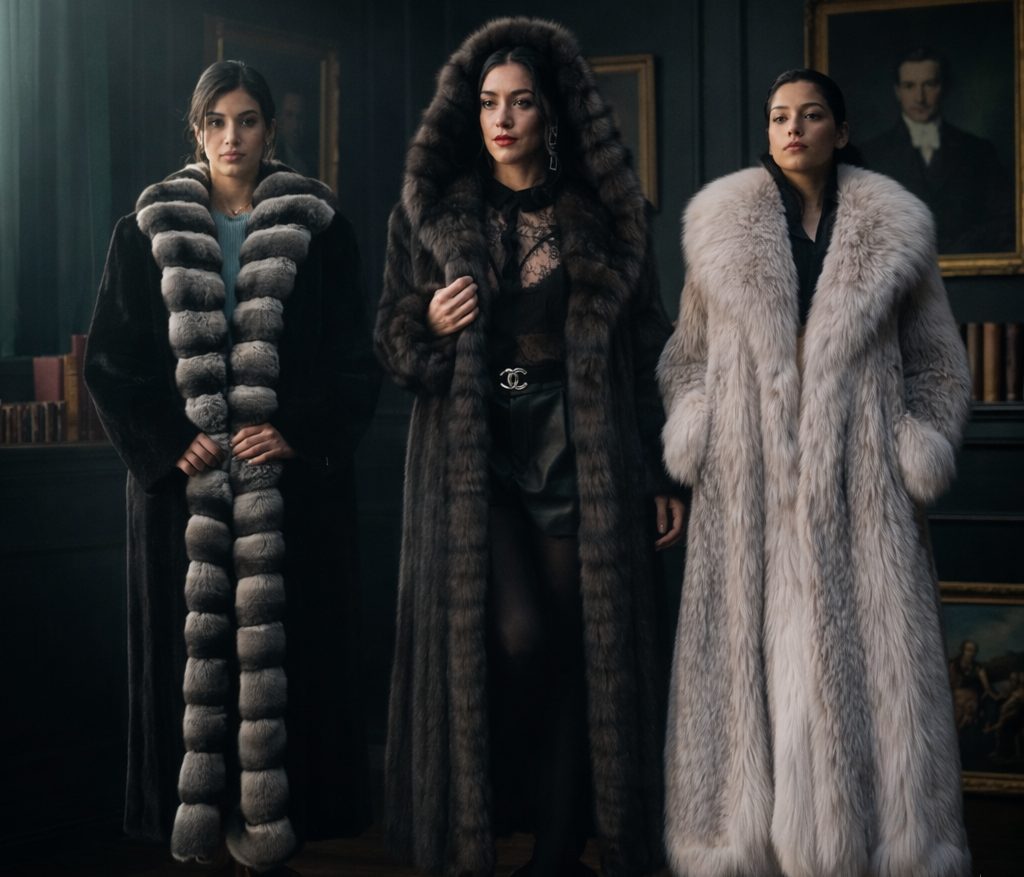
The Escalating Economics of Luxury Fur: Analyzing the Dramatic Price Surges in Chinchilla, Lynx, and Sable
The New Era of Ultra-Luxury Outerwear
The landscape of high-end fashion is undergoing a profound and unprecedented transformation. For decades, the luxury fur market has operated on a relatively stable economic curve, governed by predictable seasonal demands, established auction house rhythms, and the steady hands of master artisans. Today, however, we are witnessing a dramatic recalibration. The cost of acquiring the world’s most exclusive pelts has not merely increased; it has skyrocketed.
If you have been monitoring the market for a bespoke, heirloom-quality garment, you have likely noticed the dramatic shift in retail valuations. The industry is now navigating a 70% increase in Chinchilla, a 60% surge in Lynx driven by tightening supply across Russian and Mongolian markets, a 30% rise in Canadian Lynx, and a 60% premium on Russian Sable.
These are not arbitrary markups. They are the result of a complex convergence of global supply chain contractions, geopolitical shifts, evolving auction dynamics, and an acute shortage of specialized artisan labor.
The 70% Explosion: The Delicate Economics of Chinchilla
Chinchilla has long been universally revered as the softest natural fiber on earth. Boasting the highest hair density of any land mammal, a Chinchilla coat or jacket offers a tactile experience that is entirely unparalleled. This segment of the market has experienced a dramatic 70% price surge.
The Disappearance of Premium Supply
The global market for chinchilla is heavily stratified. There is a vast gap between lower-tier skins and elite Danish pelts. The supply of flawless pelts has contracted sharply, triggering aggressive bidding across a shrinking inventory.
The Artisan Labor Crisis
Chinchilla construction demands exceptional precision. As master furriers retire, a shortage of skilled artisans is further amplifying the 70% pricing pressure.
Featured Chinchilla Investments:
The Lynx Market: A 60% vs. 30% Divide
Lynx is bold, dramatic, and instantly recognizable. The market reflects a clear divide between global supply sources, with overall pricing shaped by a 60% surge in Russian and Mongolian Lynx markets and a 30% increase in Canadian Lynx.
Russian & Mongolian Lynx: A 60% Premium
Pelts sourced from these regions offer superior contrast and size. Sanctions, export limitations, and logistical constraints have created severe supply bottlenecks, driving a consistent 60% increase.
Canadian Lynx: A 30% Market Adjustment
Canadian Lynx remains more stable but has still experienced a 30% rise due to strict regulation, ethical sourcing, and growing global demand.
Featured Lynx Masterpieces:
Sable: The Crown Jewel Commands a 60% Surge
Russian Sable represents the pinnacle of luxury. The Barguzin variety is considered the most refined and durable fur in existence. This segment has experienced a sustained 60% price increase.
The “Silvery” Factor
Higher silver content significantly elevates value. Reduced availability of top-grade pelts has intensified global competition, reinforcing the 60% premium.
Supply Constraints
Geopolitical barriers and export complexities have created substantial acquisition challenges, further sustaining the 60% surge in pricing.
Featured Sable Assets:
The Veblen Good Phenomenon
Chinchilla, Lynx, and Sable behave as classic Veblen goods—where demand increases alongside price. The 70%, 60%, and 30% market shifts reinforce exclusivity, elevating both prestige and desirability.
Navigating the Future of High-End Outerwear
These pricing shifts are structural, not temporary. Supply limitations and artisan scarcity indicate that the current 70%, 60%, and 30% benchmarks represent a new baseline for the luxury fur market.
The era of accessible ultra-luxury fur is over. We are now in a new age of rarity—where garments are as valuable as fine art.
Get our fur guides first. One tap tells Google to show Marc Kaufman Furs at the top of your own Top Stories, Discover feed and AI Overviews.