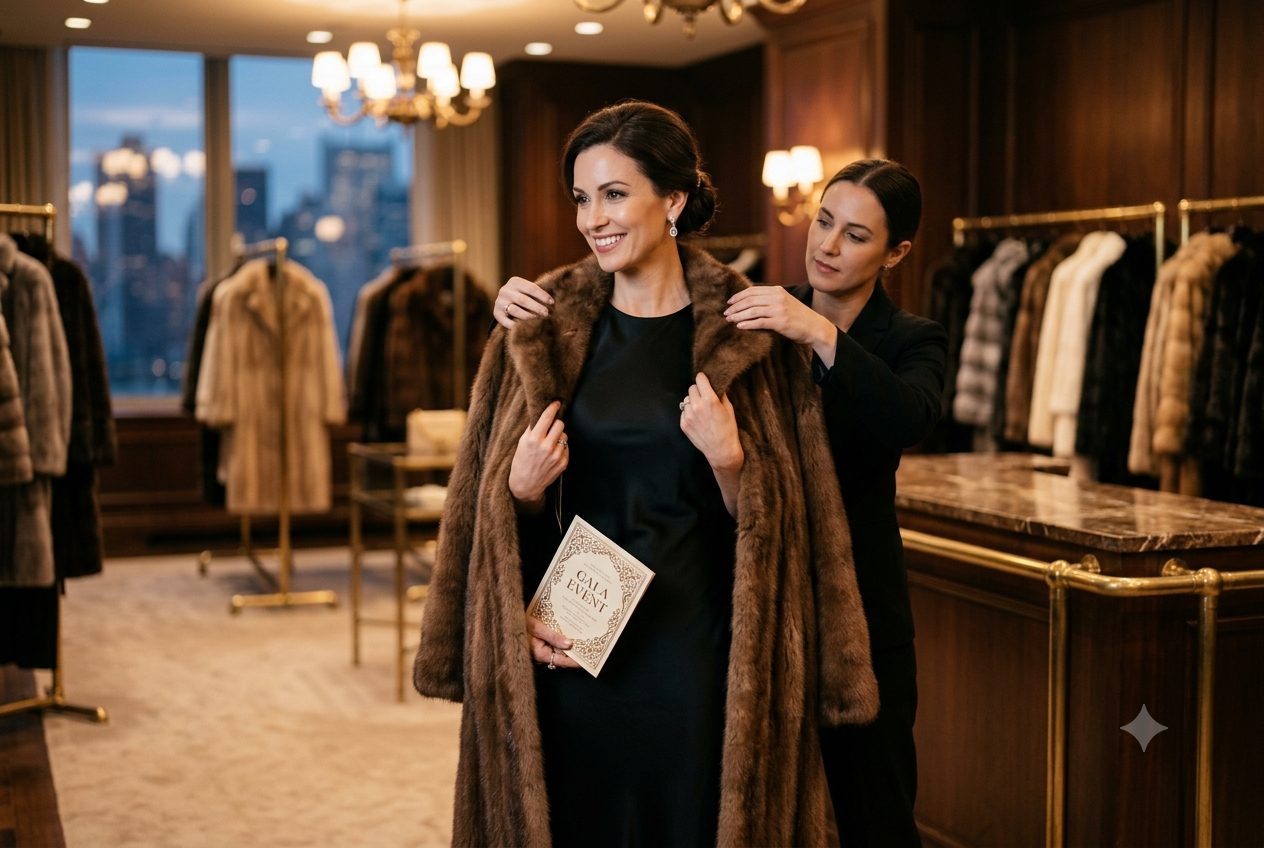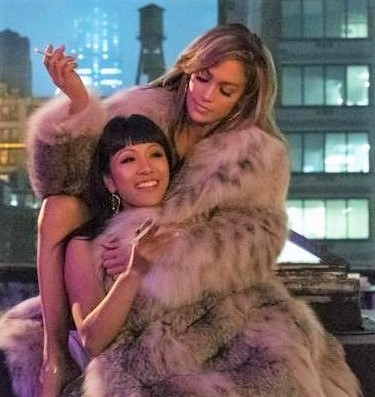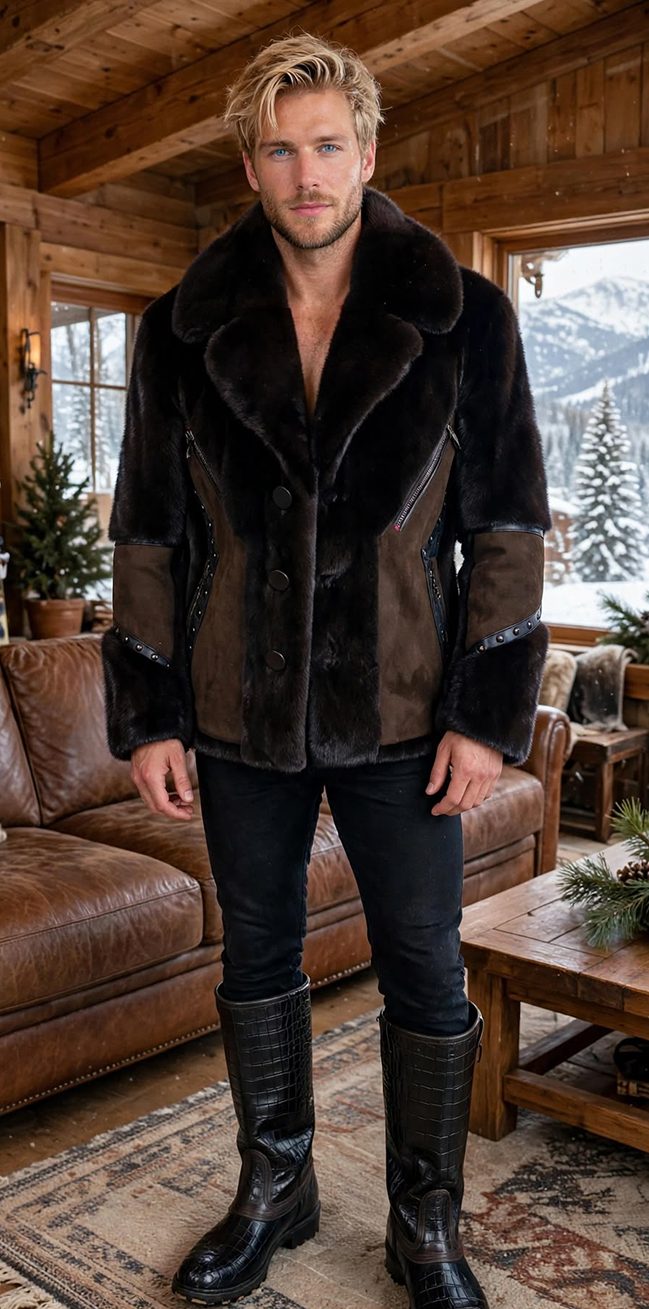
In recent years, the fashion industry has seen a massive surge in the marketing of “faux fur” as an ethical and eco-friendly alternative to the real thing. It is a compelling narrative, but it often leaves out a critical part of the conversation: the end-of-life cycle of these garments.
True sustainability is not just about how a product is manufactured; it is about how it degrades. When we look past the initial purchase and examine the long-term environmental impact, real fur offers a natural, biodegradable lifecycle that synthetic fast-fashion alternatives simply cannot match.
The Plastic Problem: What is Fake Fur Actually Made Of?
To understand the environmental toll of fake fur, we have to look at its composition. Faux fur is essentially spun plastic. It is manufactured using synthetic polymers like acrylic, nylon, and polyester—all of which are derived from petroleum.
The damage begins long before these coats are thrown away. Every time a synthetic fur garment is washed, or even worn in heavy rain, it sheds microplastics. These microscopic plastic fibers wash into our water systems, eventually making their way into the oceans and the broader food chain.
The Landfill Reality: A Century of Waste
The most glaring issue with synthetic fur is its landfill legacy. Because fake fur is born from plastic, it does not break down naturally. When a fast-fashion faux fur coat goes out of style and gets tossed in the trash, it sits in a landfill for hundreds of years, leaching chemicals into the surrounding soil.
Coupled with the “wear it once” mentality of modern fast fashion, fake fur accelerates landfill overflow at an alarming rate, turning a supposedly eco-conscious purchase into a permanent environmental problem.
Nature’s Cycle: The Biodegradability of Real Fur
By stark contrast, real fur is an organic material. Like a fallen leaf, a branch, or leather, it is part of nature’s cycle. When a real fur coat finally reaches the end of its usable life, it safely and naturally biodegrades back into the earth without leaving a permanent toxic footprint behind.
Furthermore, modern, responsible furriers utilize dressing and tanning processes designed to preserve the organic nature of the pelt, ensuring that the final product remains a sustainable, earth-friendly material.
Heirloom Quality Over Fast Fashion
Perhaps the greatest environmental benefit of real fur is its longevity. A real fur coat is not designed for a single season—it is an investment piece. Rooted in time-honored craftsmanship, such as the exacting standards of the Bergen furrier tradition, these garments are built to last for decades.
Instead of throwing a coat away when styles change, real fur can be endlessly repurposed. Vintage pieces are routinely handed down through generations, altered, or completely transformed through professional fur restyling services, keeping them out of the waste stream entirely.
Making a Truly Sustainable Choice
Choosing sustainability means looking at the entire lifespan of what we wear. Investing in real fur is an active choice to reduce plastic waste, limit microplastic pollution, and combat the devastating landfill impact of fast fashion.
Luxury fur garments are designed to last for generations — but only when they are stored correctly. In 2026, professional furriers continue to recommend climate-controlled fur storage maintained near 55°F because temperature stability plays a critical role in protecting the natural oils, leather backing, softness, and overall structure of fine fur.Whether you own a full-length mink coat, a sable jacket, a fox fur stroller, or a chinchilla wrap, proper storage conditions can dramatically affect the lifespan of your investment. Professional fur vaults are engineered specifically to preserve delicate natural materials that can deteriorate under excessive heat, dryness, or humidity.
Why Temperature Matters for Fur Storage
Fur is a natural material. Unlike synthetic outerwear, luxury furs contain leather skins and natural hair fibers that react to environmental conditions. When fur coats are stored in overheated closets, attics, garages, or dry-cleaning bags, the leather can begin to lose essential oils over time.
Dry or brittle leather
Hair shedding
Reduced softness and luster
Cracking or splitting of skins
Premature aging of the garment
Professional storage facilities are specifically designed to avoid these issues by maintaining cool, dark, humidity-controlled environments year-round.
Why 55°F Became the Industry Standard
Most luxury furriers and professional fur storage vaults operate around the 50°F–55°F range because it provides an ideal balance between cooling and humidity stability. Extremely cold environments may dry out natural leather, while warmer conditions can accelerate deterioration.
Around 55°F, fur garments remain protected from excessive heat while still retaining the flexibility and moisture balance needed to maintain supple leather and plush fur texture.
This is especially important for premium garments such as:
Temperature alone is not enough. Humidity control is equally important in professional fur storage.
Excess moisture can encourage mildew growth and odor retention, while extremely dry air may cause leather dehydration. Professional fur vaults carefully regulate humidity levels to help preserve the garment’s natural flexibility and softness.
According to the Britannica overview of fur and animal skin garments, fur has historically been valued for warmth, durability, craftsmanship, and luxury apparel, making proper preservation essential for maintaining long-term quality.
Why Home Closets Are Often a Problem
Many homeowners unknowingly damage luxury fur garments by storing them in warm closets during spring and summer months. Indoor household temperatures often exceed 70°F, especially in upper-floor closets or rooms exposed to sunlight.
Poor air circulation
Heat exposure
Sunlight fading
Plastic garment bag damage
Moth exposure
Professional fur storage vaults are specifically engineered to avoid these environmental fluctuations.
What Happens During Professional Fur Storage?
Climate-controlled 55°F storage vaults
Humidity monitoring
Fur inspection and conditioning
Cleaning and glazing services
Moth prevention protection
Secure monitored storage facilities
Many luxury furriers also inspect seams, closures, silk linings, and leather condition before seasonal storage.
Professional fur care goes beyond temperature-controlled storage. Many luxury furriers also recommend seasonal professional fur cleaning services to help remove oils, environmental residue, odors, and airborne particles that may accumulate during regular wear.
Routine cleaning helps maintain the softness, sheen, and natural beauty of luxury fur garments while preparing them properly for long-term climate-controlled storage.
Luxury Fur Is an Investment Worth Protecting
A premium fur coat is more than seasonal outerwear — it is often a generational luxury piece. Proper storage helps preserve both appearance and long-term value.
Whether you own vintage mink, contemporary sheared fur, or designer sable, professional storage can significantly extend the wearable life of the garment.
The history of luxury fur fashion continues to highlight the importance of preservation, craftsmanship, and garment care in maintaining heirloom-quality pieces.
Choosing the Right Professional Furrier in 2026
Dedicated climate-controlled fur vaults
Experience with luxury fur restoration
Cold storage near 55°F
Humidity-controlled environments
Insurance and monitored security
Professional cleaning and glazing services
Trusted furriers understand that long-term garment preservation requires specialized storage conditions that standard closets simply cannot provide.
Fur Repairs and Alterations Matter Too
Proper preservation also includes maintaining the structural integrity of the garment itself. Over time, linings, closures, seams, and leather panels may require professional attention to help extend the wearable life of luxury fur garments.
Experienced furriers often provide specialized fur repair and alteration services for resizing, relining, sleeve adjustments, restyling, and restoration work designed to preserve both comfort and long-term value.
Combining professional storage, cleaning, and repair services creates a more complete preservation approach for investment-quality mink, sable, fox, and chinchilla garments.
Final Thoughts
In 2026, the 55°F professional fur storage standard remains one of the most effective ways to preserve luxury fur garments. Stable temperature control, balanced humidity, and professional handling all work together to help maintain softness, shine, structure, and longevity.
If you own valuable mink, sable, fox, or chinchilla garments, investing in professional fur storage is one of the best ways to protect your wardrobe for years — and generations — to come.
Explore additional luxury fur care resources and seasonal services at Marc Kaufman Furs.
Over four decades on New York’s Fur District has taught Marc Kaufman one truth: a fur coat holds history in every pelt. Knowing when to restore — and when to bear witness — is the mark of a true expert.
For over forty years, the corner of West 30th Street in Manhattan has been the address where New York’s most discerning fur owners bring their most prized possessions. Marc Kaufman Furs has dressed clients in the finest chinchilla, mink, fox, and sable — and just as importantly, has helped families understand the true condition and value of what they own.
But the work is not always about beauty. Sometimes, it is about the hard truth. When a garment reaches the end of its life — when the leather beneath the fur has gone brittle, when the pelts crumble at the touch — it takes genuine expertise to say so clearly, to document it properly, and to stand behind that assessment in front of an insurance adjuster, an estate attorney, or a courtroom.
“A furrier who only tells you what you want to hear is not protecting your investment. Real expertise means reading the leather the way a physician reads an X-ray — and delivering an honest diagnosis.”
— Marc Kaufman, Master Furrier
That combination of craftsmanship and candor is precisely what makes Marc Kaufman Furs the first call for insurance companies, estate executors, and legal professionals who need an independent, credible voice on fur valuation and condition.
Our Expert Services
01 — Professional Fur Appraisal
Certified fair-market and replacement-value appraisals for insurance, estate, resale, and charitable donation purposes. Every appraisal is documented with full written findings and signed by Marc Kaufman personally.
02 — Insurance Inspection & Condition Reports
Independent physical inspections for insurance claims. We assess structural integrity, pelt condition, dry rot, previous repairs, and feasibility of restoration — and produce court-ready written reports referencing your claim number, policy holder, and date of service.
03 — Restoration & Expert Repair
From resewing a split seam to full lining replacement, our in-house fur machines and master craftspeople handle repairs with the same care that went into the garment’s original construction. When repair is possible, we deliver exceptional results.
04 — Fur Storage & Preservation
Climate-controlled cold storage keeps leather supple and guard hairs lustrous season after season. Proper storage is the single most effective form of fur preservation — far more impactful than any repair after damage has set in.
05 — Restyling & Redesign
A vintage mink stole becomes a modern wrap jacket. An inherited coat is cut down into a chic vest. We transform outmoded silhouettes into wearable heirlooms — without losing a single pelt.
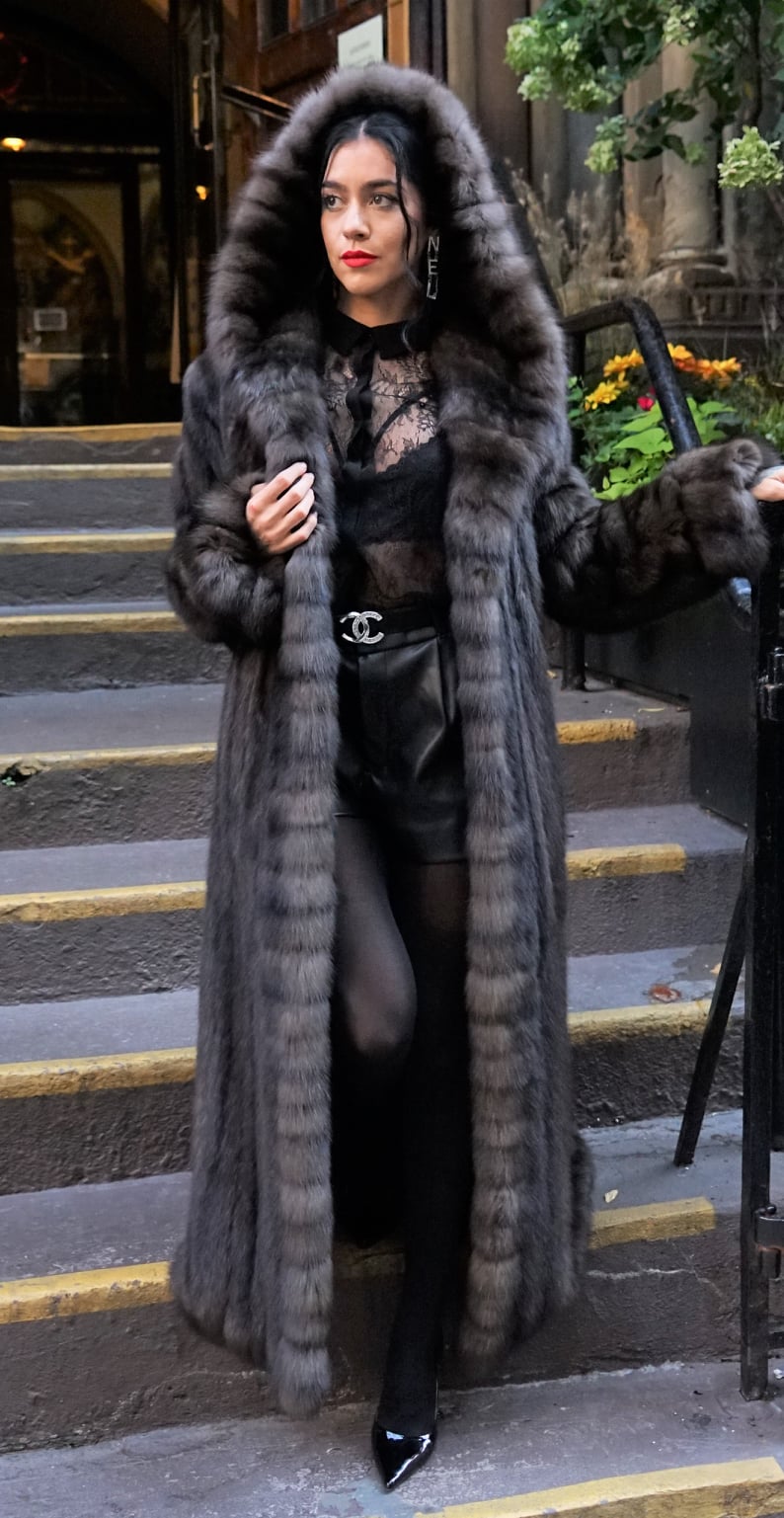
06 — Fur Expert & Legal Consultation
Marc Kaufman provides professional expert-witness testimony and written opinions for insurance disputes, estate litigation, and fraud investigations involving fur garments. His assessments are trusted by Special Investigative Units at major carriers including State Farm.
Why Insurance Professionals Trust Marc Kaufman
50+ years as a working master furrier on West 30th Street, NYC
Deep hands-on knowledge of chinchilla, mink, fox, and sable
Recognized and retained by State Farm, Chubb, and AIG adjusters
Expert in diagnosing dry rot, pelt degradation, and prior repair history
Full written condition reports delivered within the same week
Court-ready documentation and sworn expert testimony available
Unbiased third-party inspection capability — no conflict of interest
Direct experience assisting Special Investigative Unit (SIU) cases
The chinchilla garment recently submitted for inspection as part of an active State Farm insurance claim is a clear example of this work in action. Our examination found advanced dry rot throughout the pelt leather — a condition no amount of hand-stitching or patching could reverse. The honest answer, documented and delivered with precision, is the only answer that protects all parties involved.
How We Work With Insurance Carriers
Submit the garment — Drop off or ship the fur to our showroom at 212 West 30th Street, NYC. Include your claim number and adjuster contact information.
Physical inspection — Marc Kaufman personally examines the leather, pelt structure, seams, prior repairs, and all areas of damage or degradation.
Written condition report — A full professional report is prepared, referencing the policy holder, claim number, date of service, and all findings in plain, clear language.
Invoice & billing — A clear invoice referencing all claim details is issued directly to the carrier or claimant for professional appraisal and inspection services.
Follow-up support — We remain available for supplemental questions, additional documentation, or expert witness services as the claim proceeds.
Schedule an Inspection or Appraisal
Marc Kaufman Furs serves insurance carriers, estate attorneys, and private clients across the United States. To schedule a fur inspection, appraisal, or consultation, contact us directly:
The luxury market is no stranger to fluctuation, but the recent shifts we are witnessing are unprecedented. Across the board, Furs Pallate prices are Sky Rocketing, sending massive shockwaves through the entire ecosystem. This isn’t just a temporary seasonal spike; it is a fundamental market shift that will affect this industry far more significantly than any trend in recent history.
To understand the sheer magnitude of this evolution, look no further than the retail floor: a piece that was sold for $5,000 will now be sold for $15,000. A 200% price increase changes the very DNA of the market, forcing a complete transformation in how these pieces are made, bought, and sold.
1. The Impact on Making (Production)
When the value of the final product triples, the stakes of production elevate dramatically.
Zero Margin for Error: Manufacturers and artisans can no longer afford even the slightest mistake. Every cut, stitch, and design choice must perfectly reflect the new ultra-premium price tag.
Supply Chain Pressures: The cost of raw materials and ethical sourcing will inevitably increase as suppliers adjust to the final retail value of the Furs Pallate. Brands will also need to invest heavily in secure logistics and specialized insurance to protect their inventory during the manufacturing process.
2. The Impact on Buying (Consumer Behavior)
The sudden price jump instantly redefines who the customer actually is.
Shifting Demographics: The leap from $5,000 to $15,000 effectively prices out the aspirational or casual buyer. The target audience immediately shrinks to ultra-high-net-worth individuals and elite collectors.
Purchasing as an Investment: Buyers will no longer treat these pieces as mere wardrobe additions or fashion statements. They will be scrutinized as long-term financial investments, meaning consumers will demand flawless quality, deep brand heritage, and extensive after-care services before parting with their money.
3. The Impact on Selling: Retail Risks and Downfall Economics
Retailers and distributors are now sitting on a completely different value proposition, and the math for survival has changed overnight. Selling a $15,000 Furs Pallate requires an entirely new business model, bringing severe financial risks to the surface.
Impacting Sales Volume and Velocity: You cannot sell a $15,000 item with the same frequency as a $5,000 item. Sales floors will see foot traffic and conversion rates plummet as the middle-tier luxury buyer is completely priced out. The sales cycle will lengthen drastically, requiring boutiques to rely on a low-volume, high-margin model. Sales teams must pivot from standard retail service to high-touch concierge relationship building, fighting over a much smaller pool of ultra-wealthy clients.
Crushing Business Overheads: The hidden cost of carrying $15,000 inventory is staggering. Retailers will face immediate spikes in their operational overheads. Insurance premiums for the sales floor and stockrooms will skyrocket. Security measures—both physical and cyber—must be upgraded. Furthermore, the “buying experience” must justify the price, meaning retailers must pour capital into private viewing rooms, premium champagne services, and elite staff training just to make a single sale.
The Threat of Downfall Economics: This immense price hike introduces a fragile “boom or bust” reality to the market. Smaller or independent boutiques that must purchase wholesale Furs Pallates upfront will have massive amounts of capital tied up in just a few pieces of inventory. If a season underperforms or a specific style doesn’t resonate with the elite buyer, the dead stock becomes a financial anchor. Unlike a $5,000 piece that might be moved during a seasonal sale, heavily discounting a $15,000 item destroys brand equity. For many retailers, carrying this new tier of inventory is a massive gamble where one bad quarter could lead to immediate bankruptcy.
This staggering price evolution guarantees that the industry will never be the same. By shifting from accessible luxury to absolute exclusivity, the Furs Pallate market is bracing for a smaller, but immensely more high-stakes, future.
The Heirloom in the Hall Closet: A Conversation with Myself
I stood in front of the heavy mahogany closet, the scent of spring rain drifting through the open window, and looked at it. My grandmother’s mink.
To anyone else, it’s a vintage garment—a beautiful, well-cut piece of fashion. But to me, it’s the way she smelled of Chanel No. 5 when she hugged me. It’s the sight of her walking down 5th Avenue in 1974, radiant and untouchable. It’s not just “fur.” It’s her.
So, I asked myself the question I’d been avoiding: “Do I really need to send this away?”
The “Why” Behind the Vault
I started wondering what actually happens to a fur when the New York summer hits. I’m a practical man, so I dug into the “why.”
Fur isn’t like wool; it’s organic. It breathes. When the humidity climbs, the natural oils in the leather begin to evaporate. The hair becomes brittle. The “sheen” that Grandma loved becomes a dull, dry memory. Professional cold storage isn’t about luxury; it’s about biology. It’s about stopping time so the leather doesn’t crack and the legacy doesn’t crumble.
What I Found When I Googled
I’m a skeptic by nature, so I sat down and did the research. I needed to see if the “elite” reputation matched the reality of the service. I searched for Marc Kaufman Furs, and what I found wasn’t just prestige—it was a clear, transparent commitment to care.
They weren’t hiding behind “call for a quote” buttons. They had their Seasonal Packages laid out plainly:
Fur Storage and Cleaning Package: $115 per garment (includes an anti-bacterial agent)
Shearlings, Leathers & Luxury Furs: $130 per package
Fur Storage Only (Re-Store): $90 within 50 miles of NYC
Standard Fur Cleaning: $85 (includes anti-bacterial agent)
Pick-up & Delivery: $35 within a 50-mile radius (No limit on garments)
Over 150 Years of Expert Fur Service. That’s five generations of families trusting them with their history.
The “Where” and the “How”
The numbers made sense, but I still wanted to know how they’d handle her. I looked into their Fur Storage and Cleaning process. They told me about the “Vaults”—not just cold rooms, but state-of-the-art chambers kept at a precise 10°C (50°F) and 50% humidity.
They explained the cleaning process: a delicate, hand-applied method that lifts the city’s dust and oils without damaging the soul of the pelt. They aren’t just putting it in a box. They are giving it a spa treatment and a high-security sanctuary.
The Verdict: Is It Worth It?
I looked at the cost of a seasonal package again. It was, quite frankly, less than the cost of a single nice dinner in Manhattan. When I weighed that against the cost of trying to replace a family heirloom—which is, of course, impossible—the math became simple.
You don’t pay for the storage; you pay for the peace of mind that when the first frost hits in November, you’ll open that garment bag and Grandma’s coat will look exactly the way it did when she last wore it.
As I felt the soft, thick pelt one last time before scheduling that $35 pick-up, I realized that “good” isn’t enough for a legacy. You need the masters.
The Ultimate Partnership: If He Navigates the Seas, She Defines her self worth
The Seraphina — a $50M superyacht embodying maritime luxury at golden hour.
The ink was barely dry on the purchase agreement for the Seraphina, a gleaming, fifty-million-dollar masterpiece of modern naval architecture. Yet, Susan von Graffenried’s gaze wasn’t focused on the vessel’s polished mahogany or its sun-drenched upper deck. It was fixed, with an intensity that her husband, Alistair, recognized only too well, on the expansive, full-length creation draped across a mannequin in the legendary Marc Kaufman Furs showroom in New York City.
The Seraphina was, in many ways, Alistair’s triumph. A testament to a lifetime of corporate maneuvering and strategic acquisitions, it was his ticket into the world’s most exclusive yachting circles. It was, as he’d often declared during the lengthy, champagne-soaked negotiations at the Hotel du Cap-Eden-Roc in Antibes, France, his “masterpiece of maritime luxury.”
But Susan understood the nuances of power and status far better than Alistair. His tastes, though expensive, often lacked the definitive flourish that separated the truly elite from the merely wealthy. For Susan, the Seraphina was simply the stage. And she intended to be the undisputed leading lady.
She had been following the Marc Kaufman Furs collection for years. Her impeccable taste was a direct lineage of generations of Austrian and Swiss ancestry, refined over decades of traversing the Atlantic. She appreciated the exquisite quality of the craftsmanship, the undeniable heritage, and the aura of unparalleled luxury that clung to every bespoke piece. She knew, with absolute certainty, that no matter how magnificent the Seraphina was, it would feel incomplete without a signature garment that could transition seamlessly from the climate-controlled decks of their yacht to the evening chill of the world’s finest ports.
“It’s not just a coat, Alistair. It’s about making an entrance.”
Rare Montana Lynx Belly fur — prized for its softness, contrast, and exclusivity.
Alistair, still basking in the glow of his monumental superyacht purchase, chuckled indulgently. He adored his wife, and her desire for bespoke luxury fur coats was hardly surprising. She was a woman who understood the currency of appearances.
“Of course, my dear,” he replied, slipping his arm around her waist. “Whatever you desire. And you’re right, you will need something for those crisp evenings in Monte Carlo.”
The New York showroom was a sanctuary of refined elegance. Polished dark wood walls were adorned with subtle gold accents, and deep, plush velvet chairs offered a comfortable respite for those contemplating serious investments. It felt exactly like the kind of place where a woman would purchase a coat that would define an era of her life.
Marc Kaufman himself, a man whose easy charm and encyclopedic knowledge of fur were as famous as his creations, stepped forward.
“Mrs. von Graffenried,” he said, his voice a low, soothing purr, “I have been anticipating your visit. I believe I have something that will perfectly complement both your impeccable taste and the magnificence of your new vessel.”
He gestured gracefully toward the mannequin Susan had been admiring.
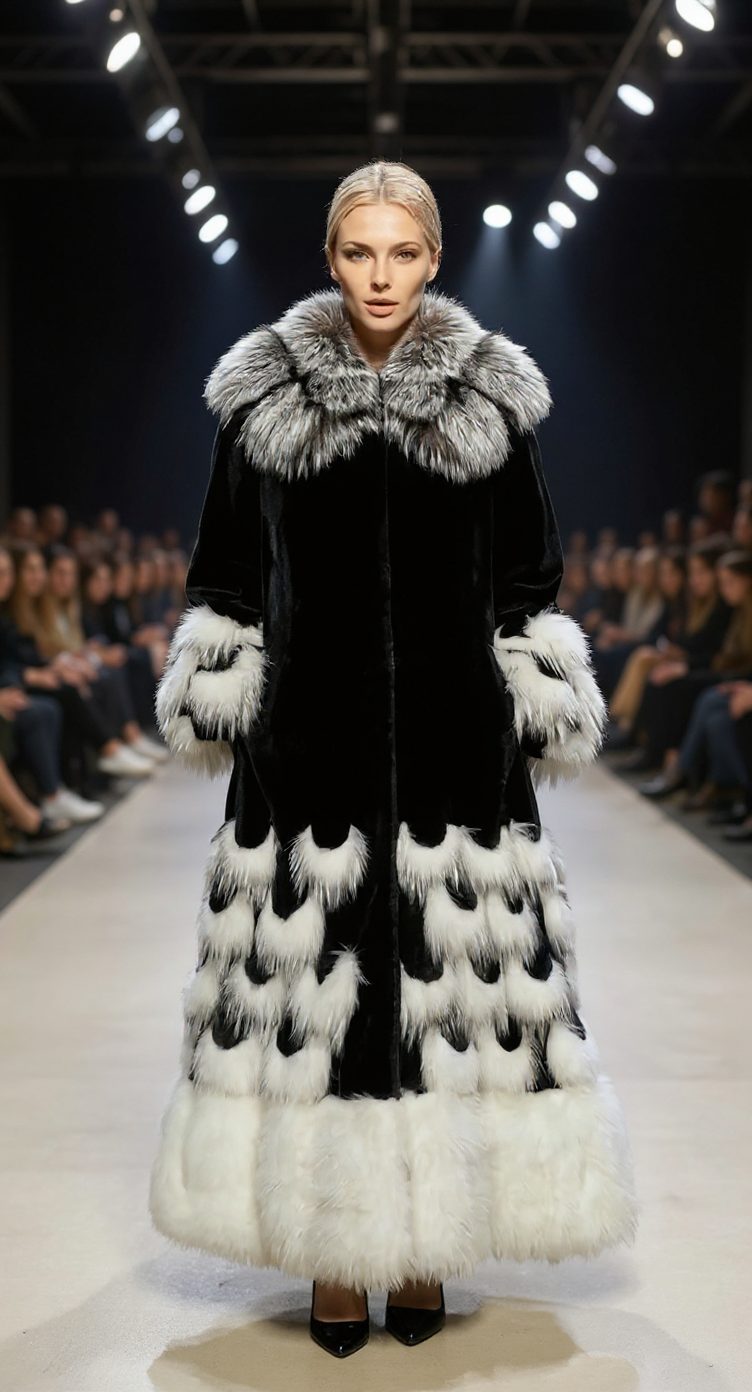
“This,” he announced, “is a custom-tailored, full-length Montana Lynx Belly coat. It is the absolute epitome of our bespoke collection, utilizing only the most desirable, pure white, and rarest portions of the pelt.”
Susan’s breath hitched slightly. The pure white fur, studded with delicate black spots, shimmered under the gallery lighting, possessing a texture so ethereal it seemed almost translucent.
“The North American Montana Lynx is known for having the plushest, densest belly fur in the world,” Marc explained, his fingers tracing the contour of the garment. “But what makes this truly special is the precise matching of the spots. It takes an incredible number of pelts—often up to seventy—and hundreds of hours of painstaking selection and sewing by our master furriers to create a single, cohesive garment of this magnitude.”
Susan stepped closer, her hand extended to touch the incredibly soft underbelly fur. It felt weightless and warm, like embracing a cloud.
“It is, of course, a bespoke piece,” Marc continued. “We tailor it to your exact measurements, ensuring a drape that is both flattering and majestic. You also have the option of selecting the interior lining—heavy Italian silk, satin, or perhaps even a subtle, personalized monogram.”
Alistair nodded with approval. “The workmanship is clearly superb,” he remarked.
Susan looked at him, her expression a mix of desire and gentle calculation. “It’s not just about the warmth, Alistair, though I’m sure it will be wonderful for the evenings we spend docked in Copenhagen. It’s about the elegance. It’s about walking into a restaurant like Le Louis XV in Monaco and having the room stop, even for just a fraction of a second, to appreciate sheer, unparalleled luxury.”
Alistair smiled, a glint of amusement in his eyes. “I suppose the cost of the coat is somewhat minor in comparison to the Seraphina.”
Susan had won. Over the next few hours, she worked closely with Marc and his tailors, discussing heavy silk linings, collar shapes, and the subtle mechanics of hidden pockets. This wasn’t just a purchase; it was the creation of a sartorial artifact.
As they left the showroom, stepping out into the crisp air of New York City, Alistair turned to her.
“So, where do you plan on wearing this masterpiece first, my dear?”
Susan smiled, a slow, deliberate expression that hinted at a meticulously planned itinerary. “I was thinking we might begin our voyage in the Mediterranean—a classic tour, but with a few unique detours. And, of course, with the perfect wardrobe.”
A statement entrance — where couture meets destination dining.
The Mediterranean Chapter
Their first major stop would be Monaco, the undisputed playground of the super-rich. The Seraphina would occupy a coveted berth in Port Hercules, its sleek lines a testament to Alistair’s success. And Susan, draped in her full-length Montana Lynx, would arrive for an evening at Le Louis XV – Alain Ducasse at the Hôtel de Paris. She pictured herself ascending the grand staircase, the coat’s pure white fur catching the warm glow of the crystal chandeliers—a vision of effortless sophistication that would leave even the most seasoned billionaires of the Principality of Monaco breathless.
Next would be St. Tropez, France, a destination that demanded a more relaxed, but no less luxurious, approach. After a day spent anchored in the crystal-clear waters of Pampelonne Beach, they would tender in for dinner at La Vague d’Or inside the Cheval Blanc St-Tropez hotel. Susan would wear the coat with the collar elegantly turned down, a subtly dramatic touch as they dined under the stars.
From France, they would sail to the Italian Riviera, dropping anchor in the picturesque harbor of Portofino, Italy. The town, with its colorful houses cascading down the hillside, was a perfect setting. They would have dinner at Da Puny, nestled right by the water’s edge.
After the refined luxury of the Western Mediterranean, they would venture further east toward Greece and the Cyclades. In Mykonos, where the sunset at Little Venice was a legendary spectacle, the Seraphina would anchor in the calm bay of Psarou Beach. Dinner would be at Scorpios.
They would then sail to Santorini, Greece, where the cliffs plunging into the caldera offered some of the most dramatic views in the world. They would stay at the Grace Hotel, Auberge Resorts Collection, high up in Imerovigli. Dinner would be at Santoro, overlooking the active volcano. Susan would wear the coat full-length, the brisk Aegean wind a constant companion, but its biting edge completely neutralized by the warmth of the Montana Lynx.
Northern expedition — where extreme luxury meets Arctic wilderness.
The Northern Expedition
But the true test of the coat’s purpose would come in the northern latitudes. Alistair was keen to explore the Scandinavian capitals, and Susan saw this as the perfect opportunity to showcase the practical necessity of her bespoke purchase.
In Stockholm, Sweden, they would moor at Strandvägen, the most prestigious quay in the city. They would dine at Frantzén, a three-Michelin-star restaurant known for its exquisite, innovative Nordic cuisine. Susan would arrive in the coat, its snowy white fur a perfect match for the Swedish landscape.
In Copenhagen, Denmark, they would stay at the historic Hotel d’Angleterre. Dinner would be at Geranium, another three-Michelin-star establishment located on the top floor of the national stadium in Parken. Susan would wear the coat, its unparalleled warmth essential against the biting Danish winds.
And finally, the ultimate destination: the Arctic Circle. They would sail to Svalbard, Norway, a remote archipelago where glaciers carved the landscape and the Northern Lights painted the sky with iridescent colors. While the other yacht guests would be bundled in bulky, high-tech synthetic Arctic gear, Susan would step onto the ice in her full-length Montana Lynx. The incredibly soft belly fur would provide supreme insulation even in the most extreme sub-zero conditions.
Watching her admire the towering glaciers of Norway, Alistair would realize with profound clarity that the coat was not just an accessory. It was a symbol of their shared commitment to a life defined by extraordinary experiences, and a refusal to settle for anything less than the very best. When Susan von Graffenried walked down the gangplank of the Seraphina, the world knew she had arrived.
People Also Ask
What is the most luxurious fur coat in the world?
The Montana Lynx Belly coat is widely considered one of the most luxurious and exclusive garments globally, prized for its pure white color, striking black spots, and incredibly soft, weightless texture.
Where do billionaires take their superyachts?
Top superyacht destinations include Port Hercules in Monaco, St. Tropez in France, Portofino in Italy, and increasingly, adventurous luxury expeditions to Svalbard, Norway.
What do you wear to a Michelin-star restaurant in Monaco?
Evening wear in Monaco is highly formal and elegant. Women often opt for designer silk dresses paired with high-end outerwear, such as a bespoke fur or cashmere coat, especially when dining at world-renowned establishments like Le Louis XV.
The landscape of high-end fashion is undergoing a profound and unprecedented transformation. For decades, the luxury fur market has operated on a relatively stable economic curve, governed by predictable seasonal demands, established auction house rhythms, and the steady hands of master artisans. Today, however, we are witnessing a dramatic recalibration. The cost of acquiring the world’s most exclusive pelts has not merely increased; it has skyrocketed.
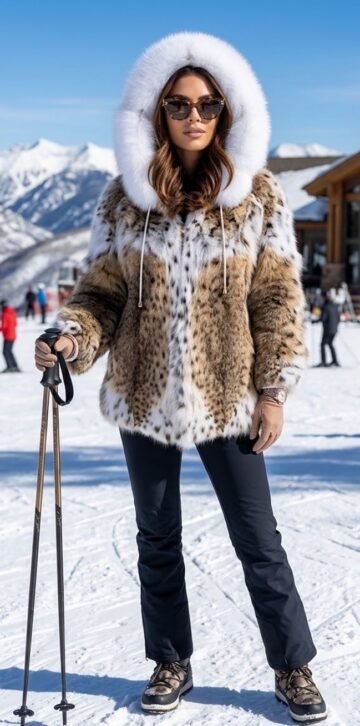
If you have been monitoring the market for a bespoke, heirloom-quality garment, you have likely noticed the dramatic shift in retail valuations. The industry is now navigating a 70% increase in Chinchilla, a 60% surge in Lynx driven by tightening supply across Russian and Mongolian markets, a 30% rise in Canadian Lynx, and a 60% premium on Russian Sable.
These are not arbitrary markups. They are the result of a complex convergence of global supply chain contractions, geopolitical shifts, evolving auction dynamics, and an acute shortage of specialized artisan labor.
The 70% Explosion: The Delicate Economics of Chinchilla
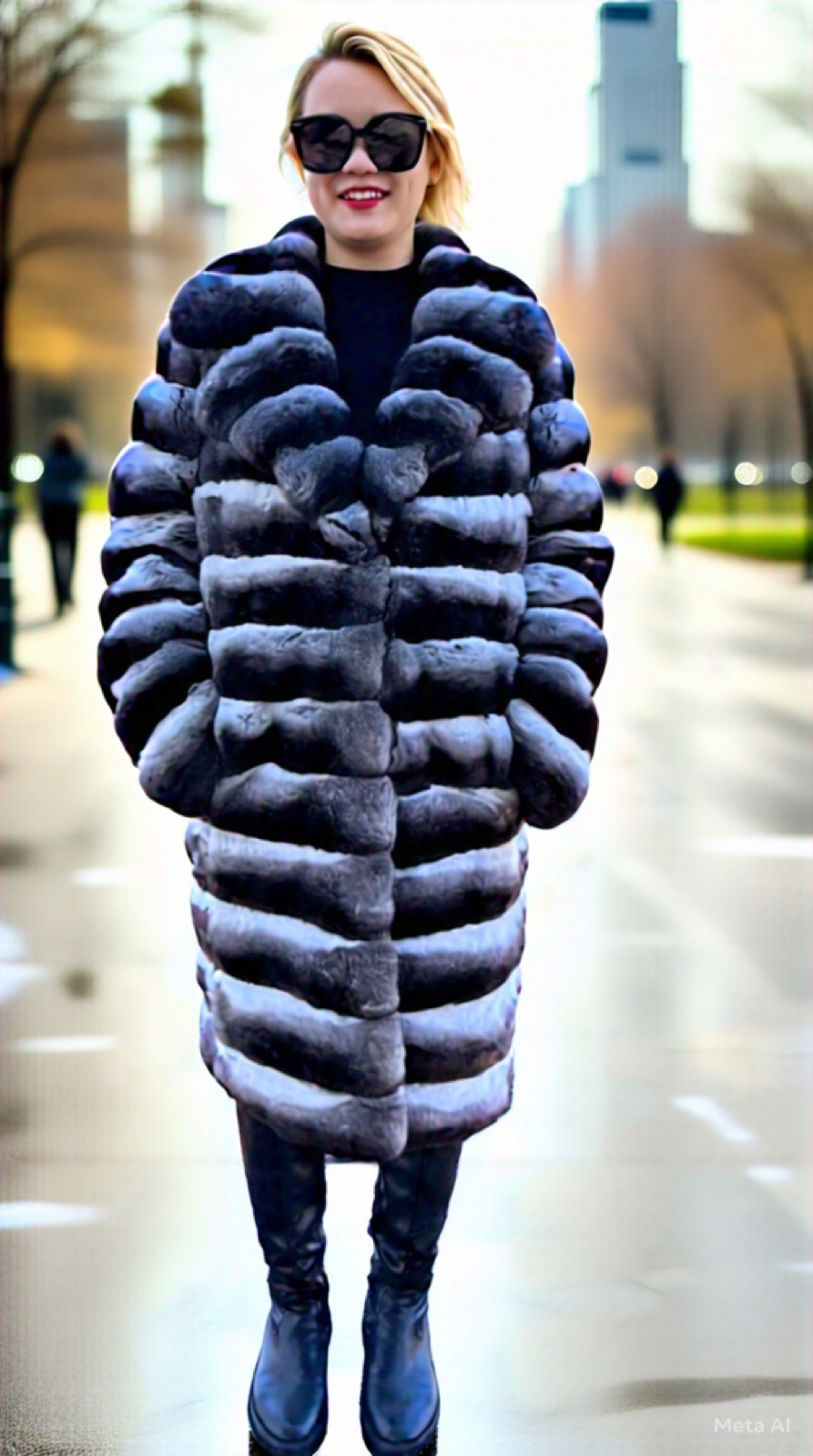
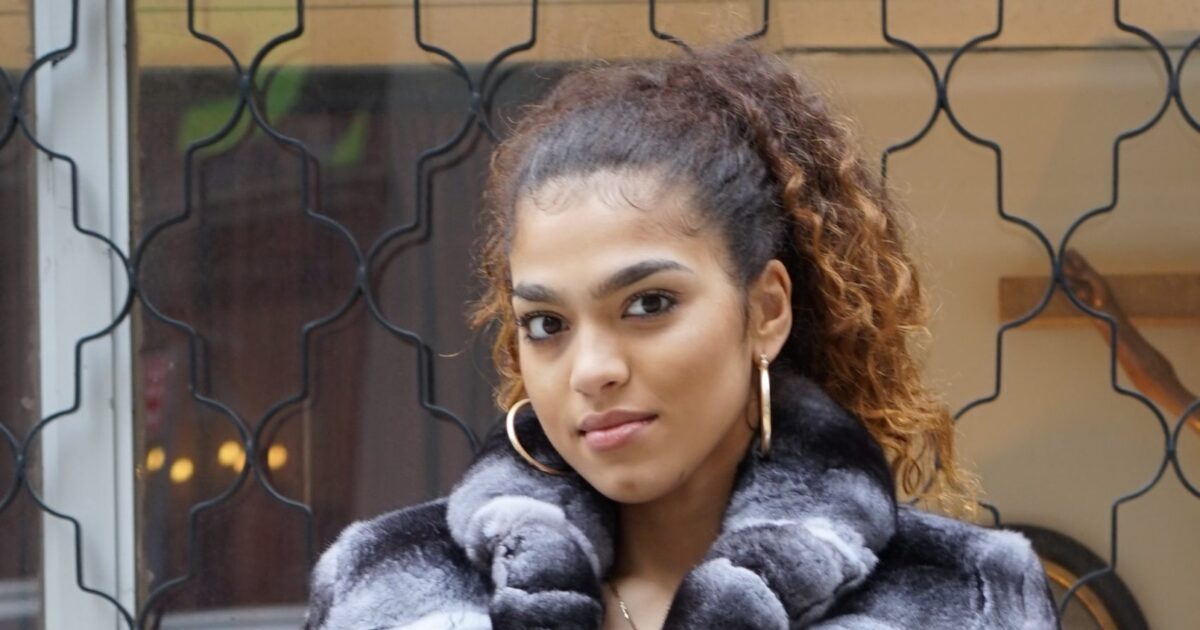
Chinchilla has long been universally revered as the softest natural fiber on earth. Boasting the highest hair density of any land mammal, a Chinchilla coat or jacket offers a tactile experience that is entirely unparalleled. This segment of the market has experienced a dramatic 70% price surge.
The Disappearance of Premium Supply
The global market for chinchilla is heavily stratified. There is a vast gap between lower-tier skins and elite Danish pelts. The supply of flawless pelts has contracted sharply, triggering aggressive bidding across a shrinking inventory.
The Artisan Labor Crisis
Chinchilla construction demands exceptional precision. As master furriers retire, a shortage of skilled artisans is further amplifying the 70% pricing pressure.
Lynx is bold, dramatic, and instantly recognizable. The market reflects a clear divide between global supply sources, with overall pricing shaped by a 60% surge in Russian and Mongolian Lynx markets and a 30% increase in Canadian Lynx.
Russian & Mongolian Lynx: A 60% Premium
Pelts sourced from these regions offer superior contrast and size. Sanctions, export limitations, and logistical constraints have created severe supply bottlenecks, driving a consistent 60% increase.
Canadian Lynx: A 30% Market Adjustment
Canadian Lynx remains more stable but has still experienced a 30% rise due to strict regulation, ethical sourcing, and growing global demand.
Russian Sable represents the pinnacle of luxury. The Barguzin variety is considered the most refined and durable fur in existence. This segment has experienced a sustained 60% price increase.
The “Silvery” Factor
Higher silver content significantly elevates value. Reduced availability of top-grade pelts has intensified global competition, reinforcing the 60% premium.
Supply Constraints
Geopolitical barriers and export complexities have created substantial acquisition challenges, further sustaining the 60% surge in pricing.
Chinchilla, Lynx, and Sable behave as classic Veblen goods—where demand increases alongside price. The 70%, 60%, and 30% market shifts reinforce exclusivity, elevating both prestige and desirability.
Navigating the Future of High-End Outerwear
These pricing shifts are structural, not temporary. Supply limitations and artisan scarcity indicate that the current 70%, 60%, and 30% benchmarks represent a new baseline for the luxury fur market.
The era of accessible ultra-luxury fur is over. We are now in a new age of rarity—where garments are as valuable as fine art.