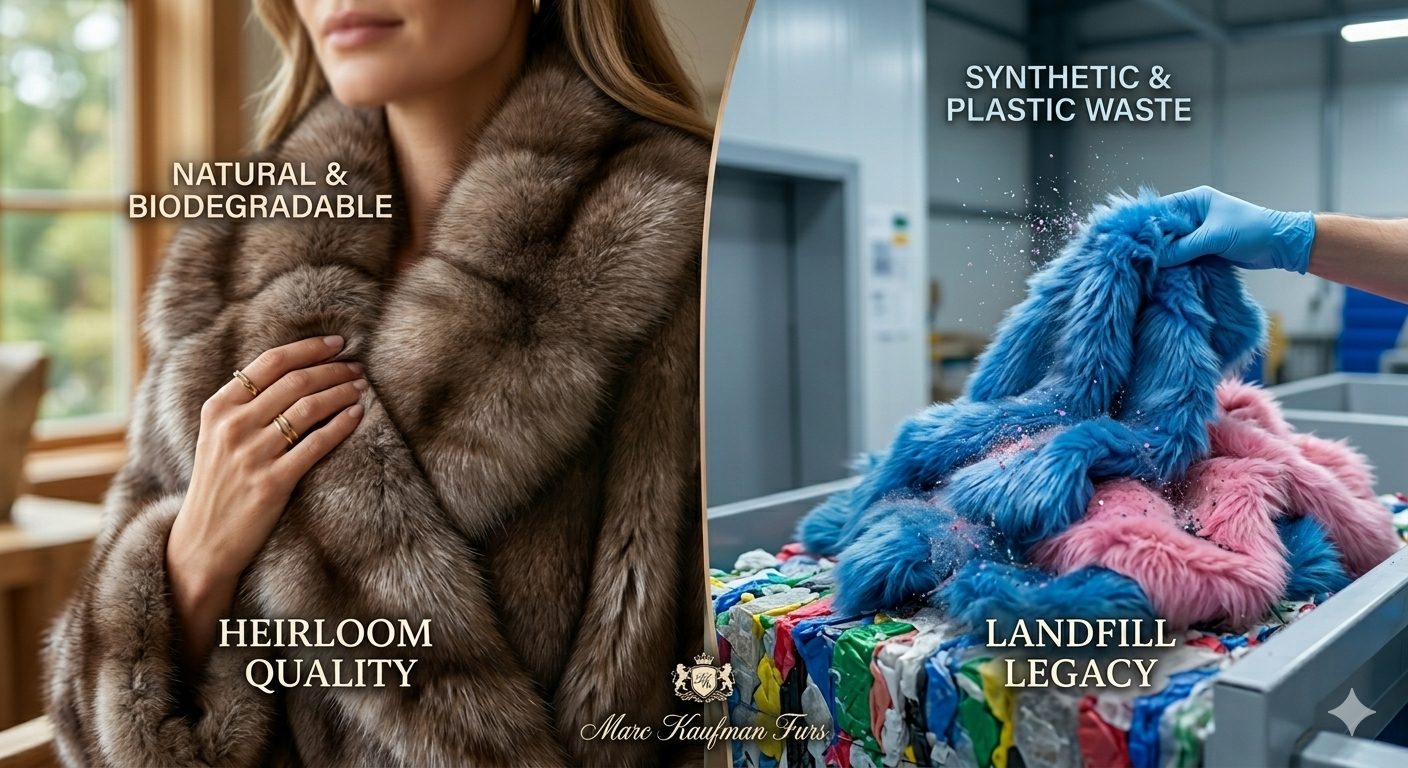
The Landfill Legacy of Fake Fur: The Hidden Environmental Benefits of Real Fur
The Greenwashing of Faux Fur
In recent years, the fashion industry has seen a massive surge in the marketing of “faux fur” as an ethical and eco-friendly alternative to the real thing. It is a compelling narrative, but it often leaves out a critical part of the conversation: the end-of-life cycle of these garments.
True sustainability is not just about how a product is manufactured; it is about how it degrades. When we look past the initial purchase and examine the long-term environmental impact, real fur offers a natural, biodegradable lifecycle that synthetic fast-fashion alternatives simply cannot match.
The Plastic Problem: What is Fake Fur Actually Made Of?
To understand the environmental toll of fake fur, we have to look at its composition. Faux fur is essentially spun plastic. It is manufactured using synthetic polymers like acrylic, nylon, and polyester—all of which are derived from petroleum.
The damage begins long before these coats are thrown away. Every time a synthetic fur garment is washed, or even worn in heavy rain, it sheds microplastics. These microscopic plastic fibers wash into our water systems, eventually making their way into the oceans and the broader food chain.
The Landfill Reality: A Century of Waste
The most glaring issue with synthetic fur is its landfill legacy. Because fake fur is born from plastic, it does not break down naturally. When a fast-fashion faux fur coat goes out of style and gets tossed in the trash, it sits in a landfill for hundreds of years, leaching chemicals into the surrounding soil.
Coupled with the “wear it once” mentality of modern fast fashion, fake fur accelerates landfill overflow at an alarming rate, turning a supposedly eco-conscious purchase into a permanent environmental problem.
Nature’s Cycle: The Biodegradability of Real Fur
By stark contrast, real fur is an organic material. Like a fallen leaf, a branch, or leather, it is part of nature’s cycle. When a real fur coat finally reaches the end of its usable life, it safely and naturally biodegrades back into the earth without leaving a permanent toxic footprint behind.
Furthermore, modern, responsible furriers utilize dressing and tanning processes designed to preserve the organic nature of the pelt, ensuring that the final product remains a sustainable, earth-friendly material.
Heirloom Quality Over Fast Fashion
Perhaps the greatest environmental benefit of real fur is its longevity. A real fur coat is not designed for a single season—it is an investment piece. Rooted in time-honored craftsmanship, such as the exacting standards of the Bergen furrier tradition, these garments are built to last for decades.
Instead of throwing a coat away when styles change, real fur can be endlessly repurposed. Vintage pieces are routinely handed down through generations, altered, or completely transformed through professional fur restyling services, keeping them out of the waste stream entirely.
Making a Truly Sustainable Choice
Choosing sustainability means looking at the entire lifespan of what we wear. Investing in real fur is an active choice to reduce plastic waste, limit microplastic pollution, and combat the devastating landfill impact of fast fashion.
Ready to invest in sustainable, heirloom-quality outerwear? Explore the stunning collection at Marc Kaufman Furs, or contact us today to learn how we can breathe new life into your vintage fur.
Get our fur guides first. One tap tells Google to show Marc Kaufman Furs at the top of your own Top Stories, Discover feed and AI Overviews.
