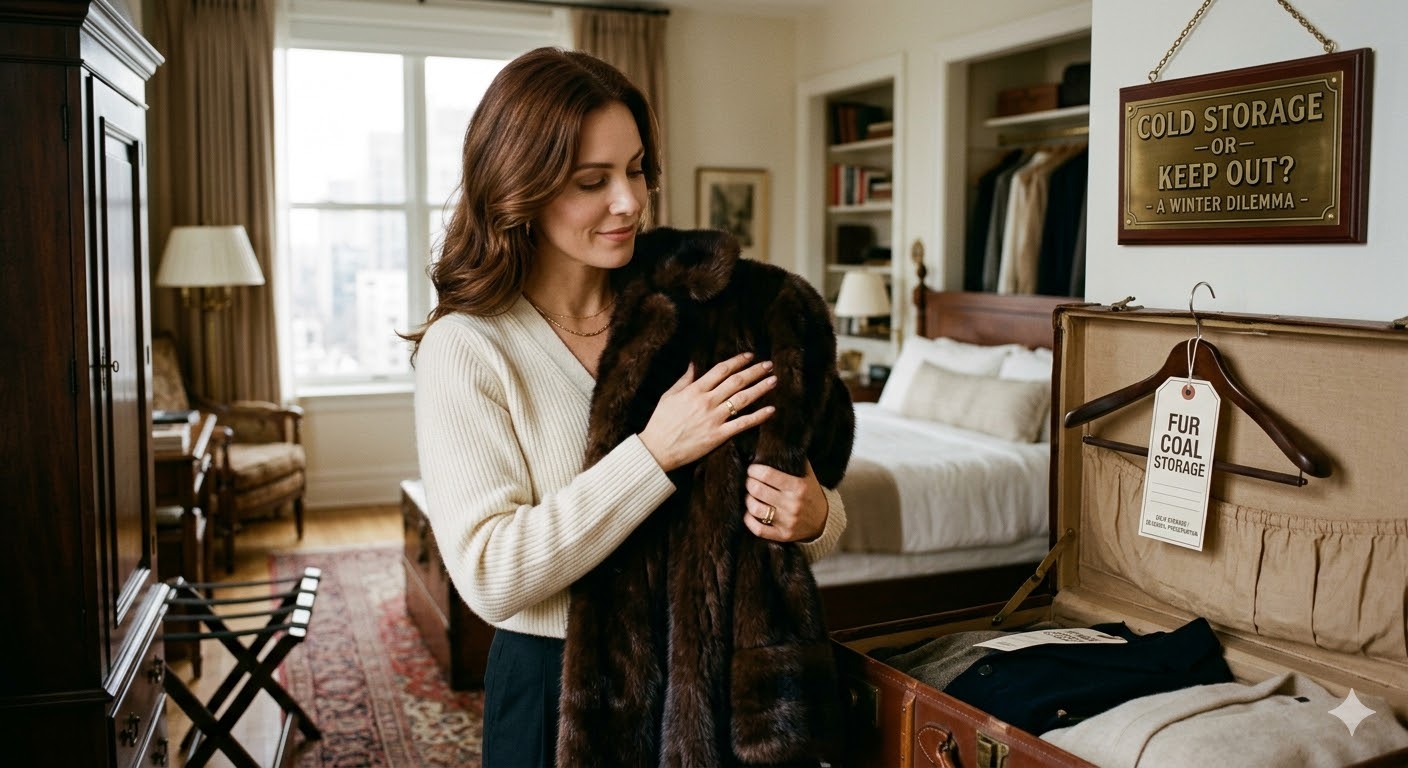
How to Store a Fur Coat
A fur coat is an investment that can last decades — but only if it’s stored properly. More furs are ruined by bad storage than by wear. Here’s how to protect yours, what to avoid at home, and why professional cold storage exists.
What damages fur
Fur has four enemies: heat (which dries out the leather backing and makes it crack), light (which fades and oxidizes the color), moisture and humidity (which breed mold and mat the fur), and moths and pests (which feed on the hair). A typical home closet exposes fur to most of these year-round.
Why your closet isn’t enough
Storing fur in a home closet — especially over the warm months — is the most common mistake. Room temperature is far too warm, the air is too dry or too humid, and garment bags trap moisture against the pelts. Cedar and mothballs don’t solve the underlying temperature and humidity problem. A fur left in a closet all summer can lose years of life in a single season.
Professional cold storage
Proper fur storage means a climate-controlled vault held at around 45–55°F with controlled humidity — cold enough to slow the natural breakdown of the leather and stop pests, humid enough to keep the pelts supple. This is what a furrier’s storage facility provides, and it’s why fur owners store their coats professionally every off-season rather than at home.
Between seasons and day to day
When your fur is in use, hang it on a broad, padded hanger with room to breathe — never in a plastic bag, and never crushed between other clothes. Keep it away from radiators, direct sun, and perfume. And have it professionally cleaned and glazed once a year to remove oils and restore luster.
Store your fur with specialists
Marc Kaufman Furs has provided professional fur cleaning, glazing, repair, and cold storage in New York City since 1870 — for our own furs and for any fur you own. Learn more about our fur storage, cleaning, and repair services, or contact us to arrange off-season storage.
Get our fur guides first. One tap tells Google to show Marc Kaufman Furs at the top of your own Top Stories, Discover feed and AI Overviews.
