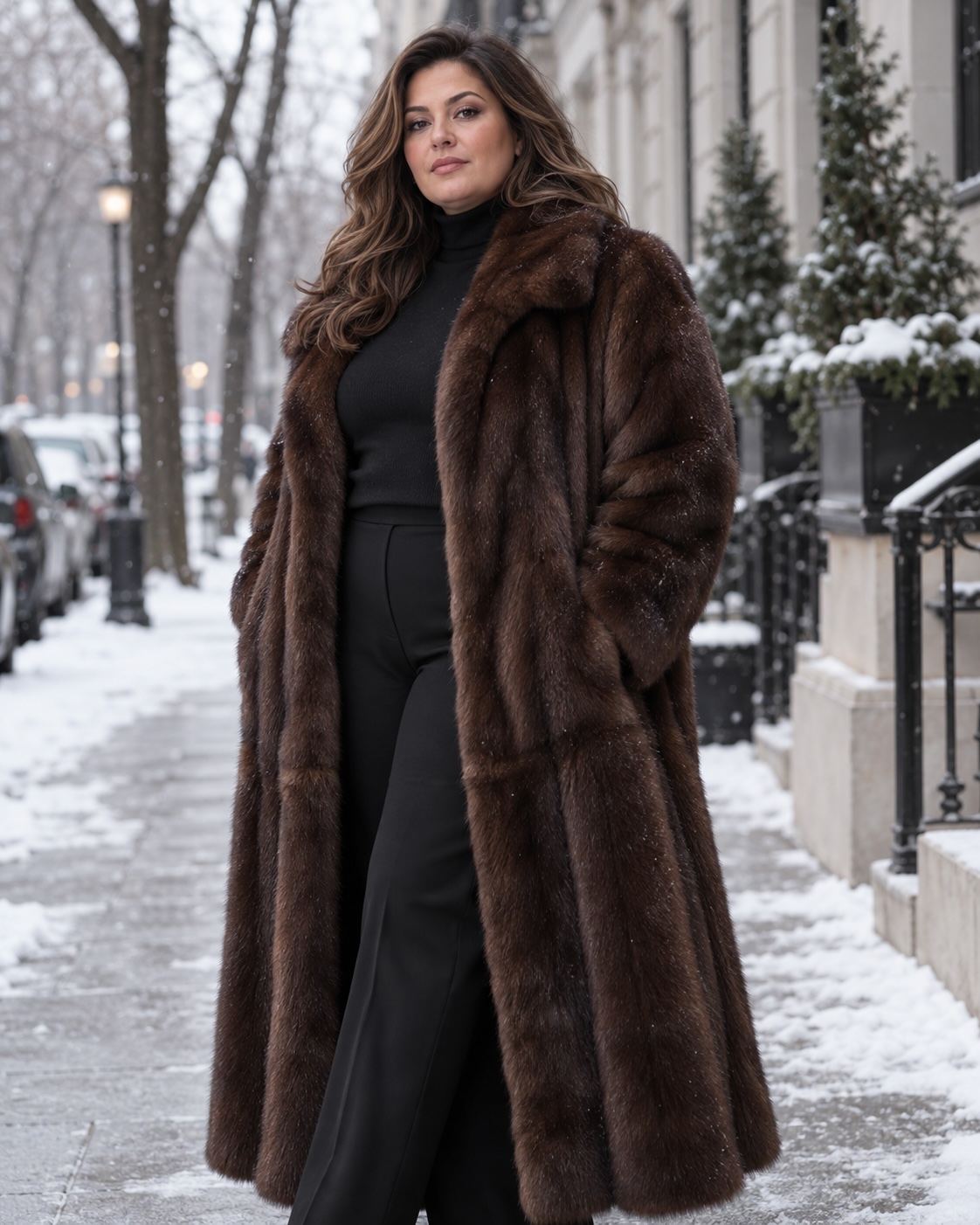
Plus Size Fur Coats: How to Buy One That Actually Fits
Fur is one of the few things left that is still cut for the person wearing it. That is worth knowing before you start, because it changes the question you are asking. In ready-to-wear you are hunting for a size that already exists. In fur you are mostly deciding what you want made — and a piece that fits a 22 is not a harder job than one that fits a 6. It is the same job with different measurements.
We keep over a hundred pieces in extended and tall sizes, and we alter and make to measure in our own New York workroom. This is roughly what we say to anyone who comes in and asks where to start.
The shoulder is the measurement that matters
Almost everything on a fur can be changed. It can be shortened, taken in, let out through the body, the sleeve narrowed or lengthened, the lining replaced, the collar restyled. The one thing that is genuinely difficult is the shoulder.
The shoulder seam is what the whole garment hangs from. If it sits too far out, the sleeve breaks in the wrong place and the whole thing looks borrowed no matter what else is right. If it sits too narrow, it pulls across the back the moment you reach forward. Moving it means opening the garment at the top and re-cutting — and on fur, re-matching every pelt across that seam. That is work we do in our own workroom, but it is the one alteration worth avoiding if you can.
So when you try something on, ignore the closure for a minute and look at the shoulder. That is the fit question. Most of the rest is work we can do.
Which furs add bulk, and which do not
Most guides answer this with colour. Colour has very little to do with it. What a fur does to your outline comes from the pelt and the way it is cut.
- Fox is the high-volume fur — long guard hair over a dense underfur, so it stands away from the body and moves when you walk. It adds width wherever it sits. That is exactly why a fox collar or fox cuffs work so well on an otherwise plain piece, and why full-length fox is a deliberately big silhouette rather than a discreet one.
- Sheared mink is the opposite. The guard hair is removed and the underfur cut to one even depth, so it lies flat and close — nearer to velvet than to fur. It is the least bulky fur we sell.
- Let-out mink — each pelt cut into diagonal strips and resewn into one long narrow band — falls in unbroken vertical lines from shoulder to hem. Vertical lines lengthen. There is a reason this is the classic full-length cut.
- Horizontal, or banded, work runs the fur across the body instead of down it. It takes more skins and far more seaming, and it is beautiful — but it reads wider. Worth knowing rather than avoiding: on a short jacket it is lovely; on a full-length piece it is a statement.
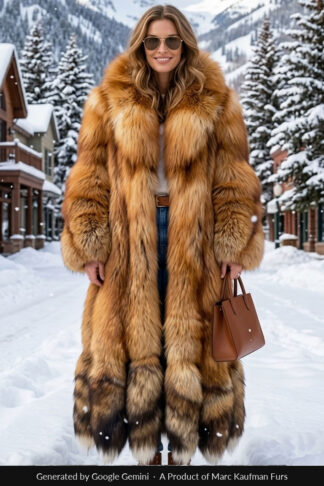
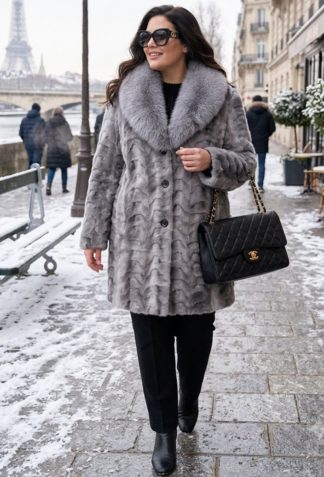
If you want fur that does not add visual width, start with a sheared mink or a let-out mink in a plain colour. If you want presence, start with fox.
Length changes more than you would think
- A stroller stops between the hip and mid-thigh. It is the length most people actually wear, because it covers you sitting down and still lets you walk without gathering a skirt of fur around your knees.
- Seven-eighths stops just above the ankle. It reads as full length without dragging, and it is easier over boots.
- Full length is the warmest and the most formal, and the weight sits in the skirt rather than on your shoulders. A nine-pound full-length often feels lighter on than a seven-pound stroller, because the length carries it.
Made to measure is not the exotic option
We have been cutting fur in New York since 1870, and made to measure is simply how we work — not a special service with a queue in front of it. You choose the fur, the length and the collar; we take your measurements; it is built to them.
That is worth saying plainly, because a lot of people arrive assuming that a larger size means waiting on a manufacturer to decide to make one. In fur, it does not. Nothing is being scaled up from a sample. It is being cut for you.
Can something you already own be let out?
Often, yes — and it is the first thing to ask about anything you have inherited or have not worn in a few years. How far depends on the seam allowance and the condition of the skins. Fur has more give at the seams than cloth does, but skins that have dried out will tear rather than stretch, and no amount of skill changes that.
When a piece cannot be let out far enough on its own, the answer is usually to add rather than to stretch: a panel let into each side seam, a contrasting inset, a new sleeve or collar in a second fur. Done properly this does not read as a repair — it reads as the design.
Bring it in and we will tell you honestly whether it is worth the work before you spend anything on it. Our fur services FAQ covers what we can and cannot do, and cleaning, repairs and cold storage are all handled in the same workroom.
Two honest warnings
Be careful buying vintage without a fitting. Older pieces were cut narrower through the shoulder and the arm than most people expect, and the shoulder is the one thing that is hard to move. Something two sizes too small in the body is often workable. Something too narrow across the shoulders usually is not.
Ignore the size on the label. Fur labels are inconsistent across decades and makers, and a great many of our pieces have no size in them at all, because they were made for one person. Measurements and a fitting are the only things that tell you anything.
Where to start
Our plus size and tall collection runs to more than a hundred pieces. Every one of them can be altered, and anything else in the shop can be made to your measurements whether or not it appears there.
See it on yourself before you speak to anyone
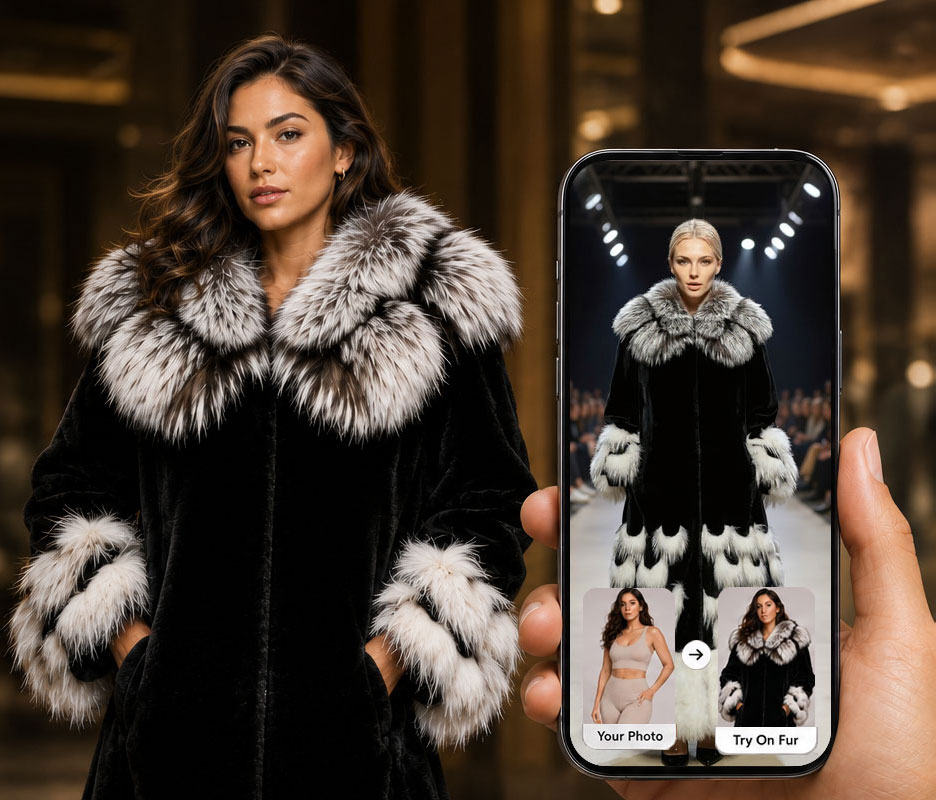
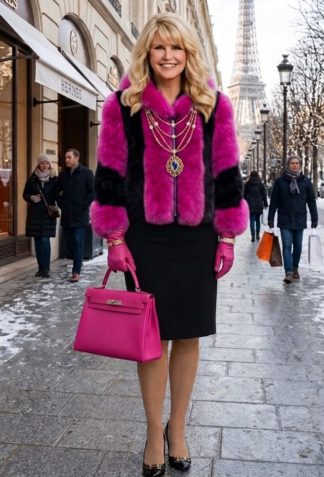
Every piece in the shop has a virtual try-on. Upload a photograph of yourself and you are wearing the fur about a minute later. It is free, and you do not need an account to try it.
This matters more here than almost anywhere else. If you have spent years guessing from a photograph of someone built nothing like you, seeing the piece on your own shoulders settles it in a minute. Put a fox and a sheared mink on the same photograph and the difference in bulk stops being a paragraph and becomes something you can see.
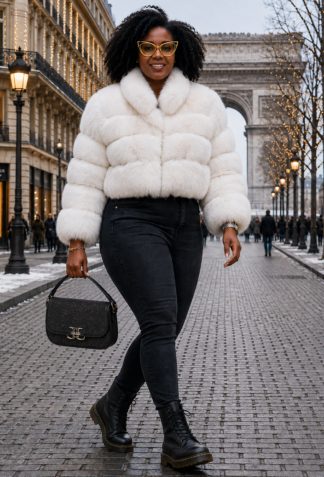
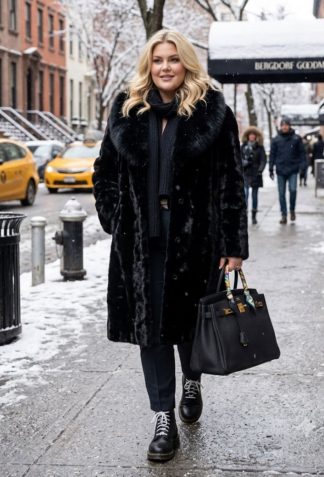
Sign up — it is also free — and you can change the background too, from Paris in the snow to a winter wedding, and add glasses, a bag or boots so you are judging the whole look rather than the fur on its own.
Or call us on +1 212-563-3877 and describe what you are after. We have been doing this since 1870, and we would rather talk you out of the wrong one than sell it to you.
Get our fur guides first. One tap tells Google to show Marc Kaufman Furs at the top of your own Top Stories, Discover feed and AI Overviews.
