
Plus Size Fur Coat Buying Guide: Fit, Furs and Length
A plus size fur coat is not a harder job for a furrier than any other. Fur is still cut for the person who wears it, so a piece that fits a 22 is the same work as one that fits a 6, with different measurements. This is what we tell people who ask in our New York workroom.
Below: the shoulder, which furs add bulk, how the skins are joined, length, made to measure and letting out, two warnings, and seeing it on yourself.
Start With the Shoulder
Almost everything on a fur can be shortened, taken in, let out or relined. The shoulder is the exception. Too wide and the sleeve breaks in the wrong place; too narrow and it pulls across the back when you reach forward. Moving it means re-matching every pelt across the seam: work we do in our own workroom, but the one alteration worth avoiding. So when you try something on, look at the shoulder seam first. It should rest on the point of your shoulder with no pull across the back. Most of the rest can be done at a fitting.
Which Furs Add Bulk, and Which Do Not
Colour has little to do with it: your outline comes from the pelt and the cut. Fox is the high-volume fur, long guard hair over a dense underfur, so it stands away from the body. It adds width wherever it sits, which is why a fox collar lifts a plain piece and a full-length fox fur coat is a deliberately big shape.
Sheared mink is the opposite: the underfur is cut to one even depth, so it lies flat, nearer to velvet than to fur. Let-out mink, each pelt cut into narrow strips and resewn into one long band, falls in unbroken lines from shoulder to hem, and vertical lines lengthen. That is why it is the classic cut for a full-length mink coat; how a let-out mink is made shows the work.
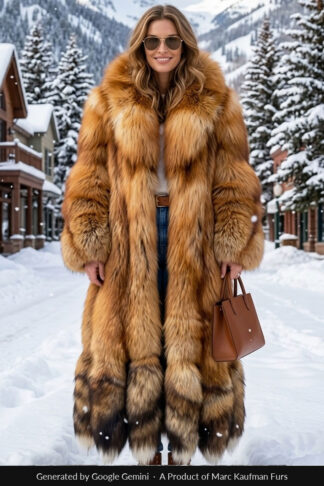

Sable is lighter and silkier than mink and lies close; see every sable coat. Chinchilla is the softest fur we sell, dense and delicate, best for evenings; see every chinchilla coat. For less width, start with sheared or let-out mink in a plain colour (the mink coat guide); for presence, start with fox (the fox guide).
Rings, Diamonds and Panels
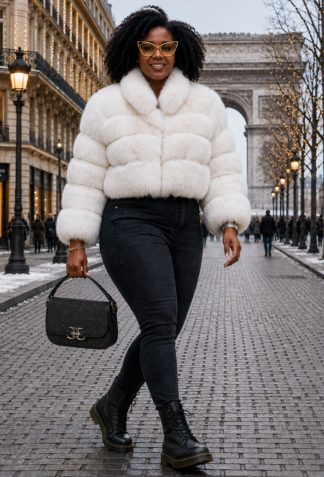
How the skins are joined changes the shape as much as the fur. Horizontal work runs the fur across the body in rings, and it reads wider: lovely on a short jacket, a statement on anything long. The plus size white fox jacket in horizontal rings, on the left below, is the short version done well: it stops at the waist, and the deep shawl collar draws the eye up to the face.
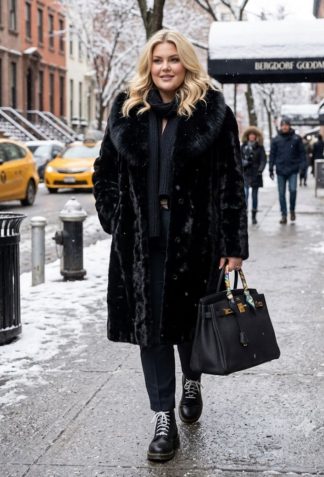
On the right, the diamond black mink jacket is worked in a diamond pattern that breaks up a large dark surface without adding volume, and its fox collar keeps the fullness at the neck. A side panel in a second fur, as on the fuchsia fox jacket, shapes a piece from the side.
Length: Jacket, Stroller or Full Length
A jacket ends at the hip and is the easiest to wear every day. The plus size blue iris mink jacket, blue-grey mink with a silver fox collar and cuffs, is on the left below; every mink jacket can be cut the same way (the mink jacket guide).
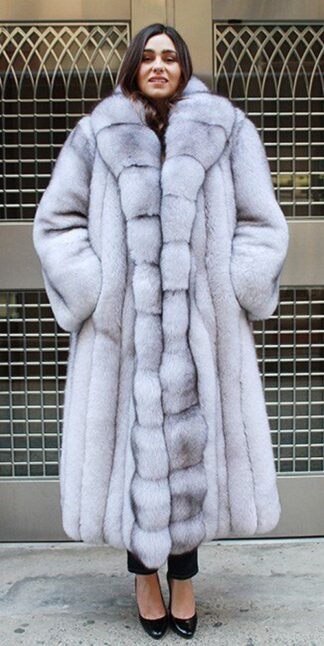
A stroller stops between the hip and the knee: it covers you sitting down and still lets you walk freely, and a tie belt, as on the whiskey mink stroller, gives it a waist. Full length is the warmest and the most formal, and its weight hangs from the skirt rather than the shoulders.


If you wear fur in real weather, a hood is worth having at any length: see every hooded fur coat. A fur vest or a cape takes the sleeve out of the question altogether.
Made to Measure, and Letting Out What You Own
Made to measure is simply how we work, not a special service. You choose the fur, the length and the collar, we take your measurements, and the piece is built to them. Nothing is scaled up from a sample, so the shoulder, the sleeve and the hem stay in proportion, the same way we cut a men’s fur coat for a big and tall frame.
A fur you already own can often be let out. How far depends on the seam allowance and the condition of the skins: skins that have dried out tear rather than stretch. When the seams run out, add rather than stretch: a panel in each side, or a new collar or sleeve in a second fur. Done well it reads as design, not repair (fur restyling), and we will tell you honestly whether it is worth the work before you spend anything.
Two Honest Warnings
Be careful buying vintage or pre-owned without a fitting. Older pieces were cut narrower through the shoulder and arm: too small in the body is often workable, too narrow across the shoulders usually is not. And ignore the size on the label. Labels vary across decades and makers, and many of our pieces have none, because they were made for one person. Only measurements and a fitting tell you anything.
Where to Start
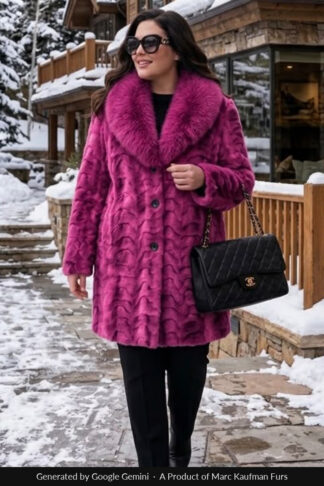
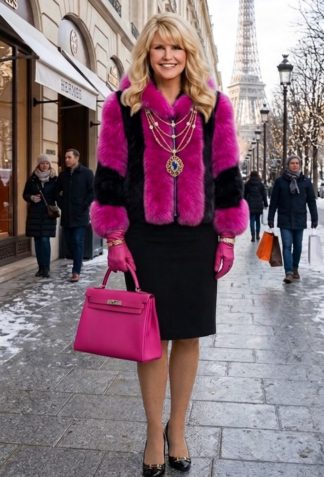
Our plus size collection has more than a hundred pieces, and every one can be altered; anything else in the shop can be made to your measurements. The first three in it today: a fuchsia mink jacket with a fox shawl collar, a full-length mahogany mink with a fox tuxedo front and the fuchsia fox jacket.

See It on Yourself First
If you have spent years judging fur from photographs of someone built nothing like you, our virtual fur try-on settles it. Upload a picture of yourself taken straight on in good light, pick any piece on the site, and it appears on your own shoulders in about a minute. Put a fox and a sheared mink on the same photograph and the difference in bulk becomes something you can see. It is free and needs no account. There is a daily limit, and it starts again the next day.
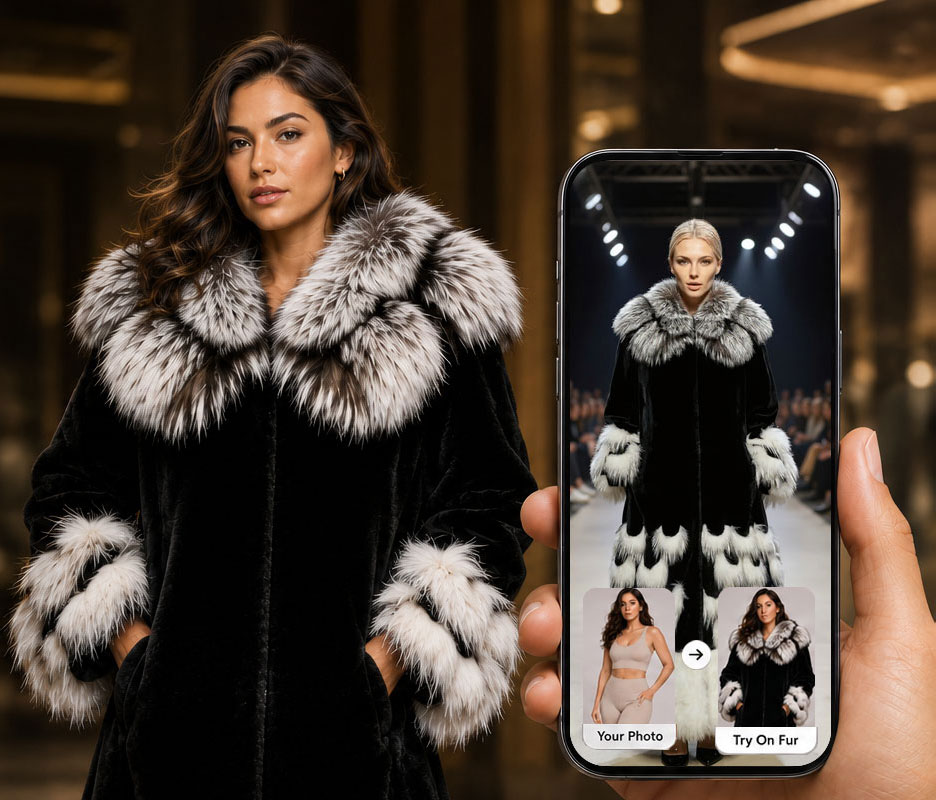
The styler is free too: Paris in the snow, Central Park or a winter wedding behind you, glasses, a bag or boots on, so you judge the whole look. Every picture keeps a small credit line at the bottom. It cannot tell you how the fur feels; that, and the final fit, are settled at a fitting.
Keeping It
Hang it on a broad padded hanger, never in plastic, away from heat and sunlight. Each spring it goes into cold storage; how to store a fur explains why.
Questions
Do you make fur coats in plus sizes?
Yes. Every piece is cut to your measurements in our New York workroom, so a larger size is the same work with different numbers. The plus size collection.
Which fur is the least bulky?
Sheared mink: the guard hair is removed and the underfur cut to one even depth, so it lies flat. Let-out mink comes next. Fox adds the most volume. A sheared mink cape.
Can a fur I already own be let out?
Often, if the leather is still supple. When the seams run out, a panel in a second fur adds the room. Fur restyling.
Every piece is made and fitted in our New York workroom, where our family has been making furs since 1870. See the plus size fur coats, try one on your own photo first, or call us on +1 212-563-3877 and visit the showroom at 212 West 30th Street. We would rather talk you out of the wrong piece than sell it to you.
Get our fur guides first. One tap tells Google to show Marc Kaufman Furs at the top of your own Top Stories, Discover feed and AI Overviews.
