Mink Coat Buying Guide: How to Choose One That Lasts
A mink coat is the one most people mean when they say fur: light for its warmth, sleek rather than bulky, and made to be worn for twenty or thirty winters. This is what we tell a first-time buyer in our New York workroom: how to read the fur, which length to choose, what the colours are called, how it should fit, and what you are paying for.
Below: judging the fur, length, colour, mink against sable and fox, men’s and plus size, fit, the price, and how to see a piece on yourself before you decide.
How to Judge the Fur
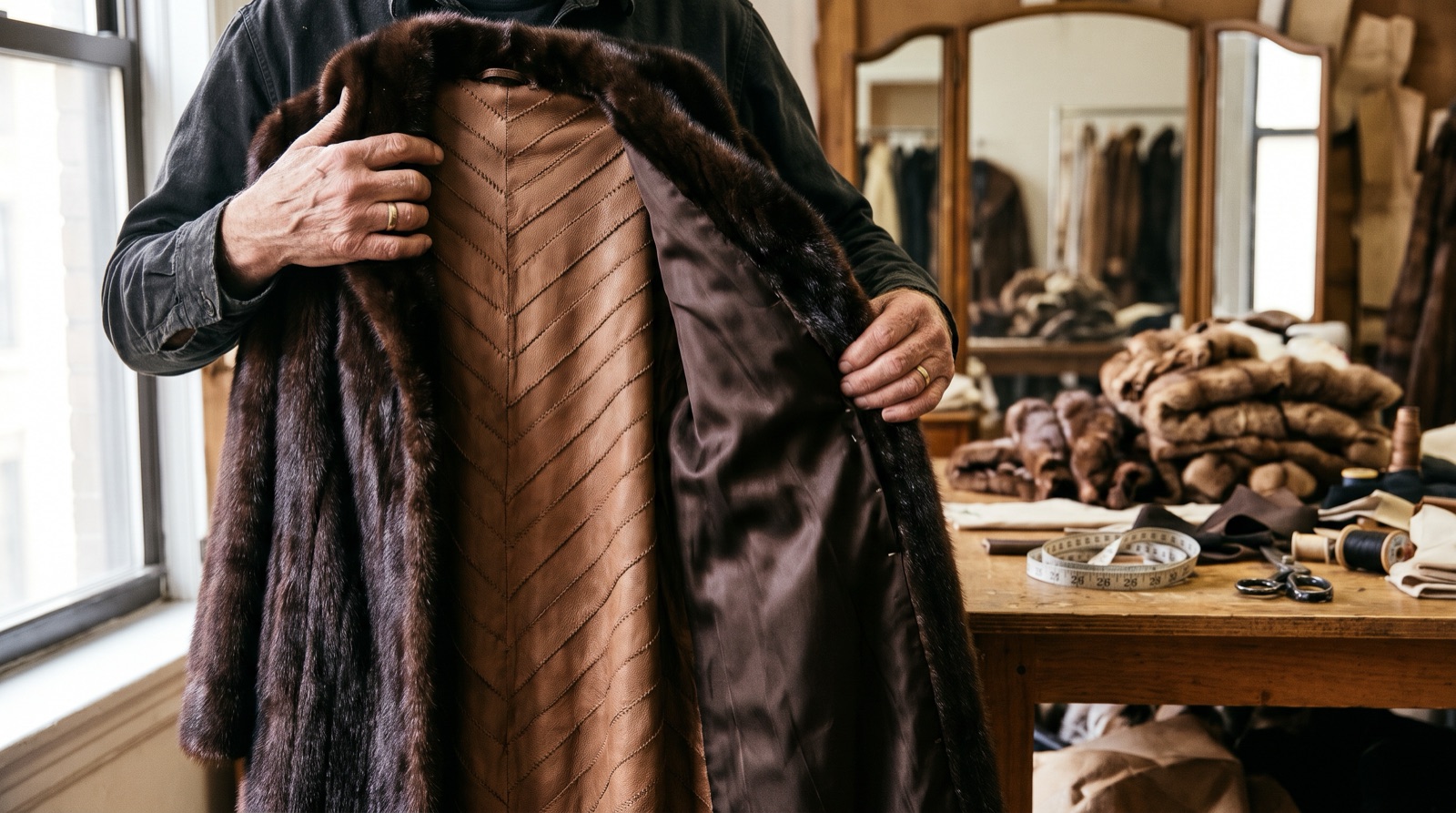
Start with your hands. Press the fur flat with your palm and let go: good mink springs straight back, and the guard hairs lie evenly with a deep, almost wet-looking shine. Then turn it over. The leather should be soft, pale and even, with fine, regular seams. Dull, flat or stiff anywhere means poor skins or poor dressing, whatever the label says; our buying guide for every fur covers the same checks.
Female and male skins are both used. Female mink is smaller, lighter and silkier, with a finer leather, so a piece made from it sits lighter on the shoulders and costs more per skin. Male mink is larger and fuller, with a thicker leather: a plusher, heavier piece at a lower price. Ask which a piece is; our real mink coats say so when it matters.
Then how the skins were worked. Let out means each skin was cut into narrow diagonal strips and re-sewn to run the whole length of the garment, which is where the unbroken vertical shimmer comes from, and it takes days of skilled work. Horizontal mink uses whole skins in bands across the body: lighter, more casual, less costly, and very much in fashion. Neither is better; they are different garments. We showed the process step by step in how let-out mink is made.
Length: Full-Length, Stroller or Jacket
Full-length means mid-calf to the ankle: the warmest, the most formal, and the one that turns heads. It is the right choice if you walk in the cold, dress for evenings, or want the piece your daughter will inherit. Everything we make at this length is in the full-length mink coats collection.
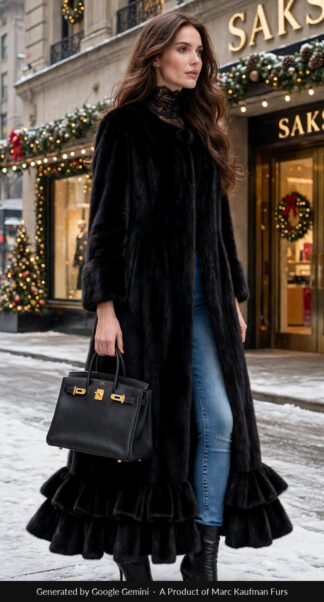
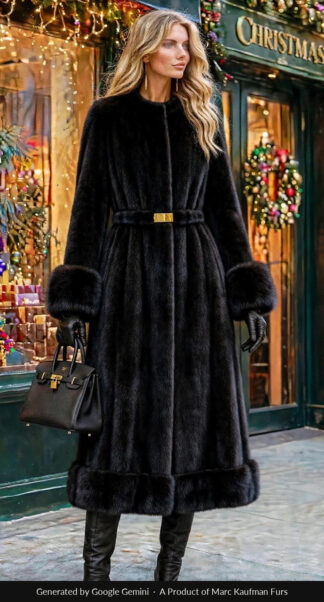
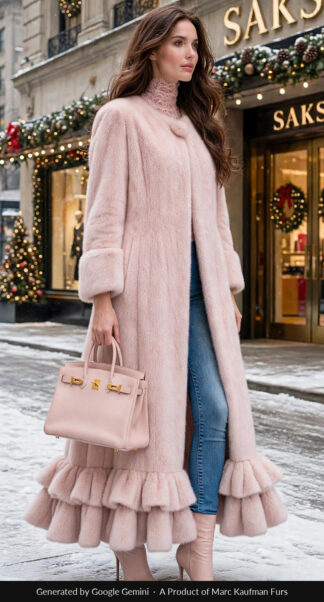
A stroller is our word for a length between the hip and mid-thigh. It gets in and out of taxis without a fight and covers a dress or a long sweater, which is why it is the length most New Yorkers live in: see the mink strollers. A mink jacket stops at the waist or the hip and goes over jeans every day; the cropped, ruffled and flounce-sleeve shapes that arrived this autumn are what younger buyers ask for first.
Colour
Natural mink runs from near-black through the browns to grey and white, and the trade names are worth knowing. Ranch is the dark brown-black most people picture; the deepest, most even ranch skins carry the Blackglama name, explained in what is Blackglama mink. Mahogany is a rich red-brown, whiskey a warm golden brown, sapphire a soft blue-grey. These are undyed, so the colour is the skin’s own and will not fade.
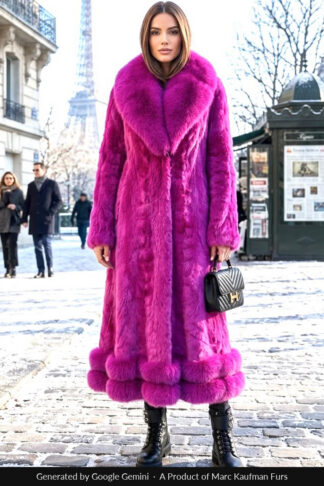
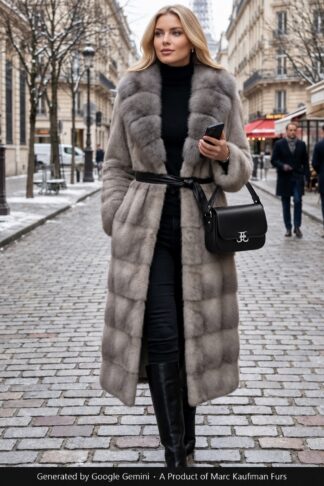
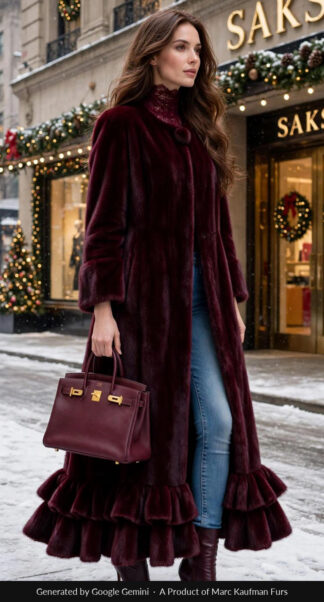
Dyed mink is where the fun is: blush, fuchsia, burgundy, aqua, and the pinks on our pink mink page. A good dye house leaves the fur as soft as the natural skin, so judge a coloured piece by the same hand test. Collars change a piece as much as colour does: a fox shawl collar adds volume, a sable collar adds quiet luxury, and a hood on one of our hooded furs replaces a hat on the coldest days.
Mink Against Sable and Fox
A sable coat is lighter, silkier and warmer for its weight than mink, with silvery guard hairs no dye can copy, and it is the most expensive fur we sell; most first-time sable buyers start with a jacket or a collar. The two are set side by side in sable vs mink.
A fox fur coat is the opposite choice: long guard hair, real volume, and a presence mink does not try for. Fox suits a big collar, a hood trim or a statement piece, and it takes colour beautifully. Mink is sleeker, closer to the body and easier to wear every day, which is why we call it the safer first buy in mink vs fox.
Men’s and Plus Size
Men buy mink too, and more every year: a hooded bomber with cargo pockets, a biker jacket with zips, a double-breasted overcoat with contrast lapels. The men’s mink pieces are cut with a man’s shoulder and a longer sleeve, and the full range of men’s fur coats and jackets, in mink, fox, chinchilla and sable, has its own page and its own buying guide.
Plus size is made, not scaled. We do not stretch a size-8 pattern; we cut to your measurements, with the shoulder, the sleeve and the hem in proportion, so it hangs as it should. The plus size fur coats collection is here, and the plus size guide covers which shapes flatter.
How It Should Fit
Shoulders first: the seam sits on the point of your shoulder, not beyond it. Sleeves reach the wrist bone with your arms down, with room for a sweater and no pull across the back. A full-length hem clears the ground by a few inches in the shoes you will wear with it. Everything else can be altered in our workroom, and a fitting is how every piece leaves the shop.
What the Price Is Made Of
Four things set the price: the grade of the skins, how many a full-length piece needs, whether they were let out, and the trim. Dozens of skins go into one garment, hand-matched for colour and texture so the eye reads them as one, and the matching is part of what you pay for. Let-out work costs more than horizontal; a fox or sable collar adds to it; a silk lining and a monogram finish it. The fur clearance page is where last season’s pieces and one-offs go, at the same quality.
See It on Yourself First
Length and colour are the two things people get wrong when they buy from a photograph. Our virtual fur try-on puts any piece on the site onto a photograph of you, so you can see a full-length ranch against a whiskey stroller on your own body before you ask for a quote. Upload a photo taken straight on in good light and the piece appears on you in about a minute. It is free, needs no account, and everyone gets three try-ons a day.
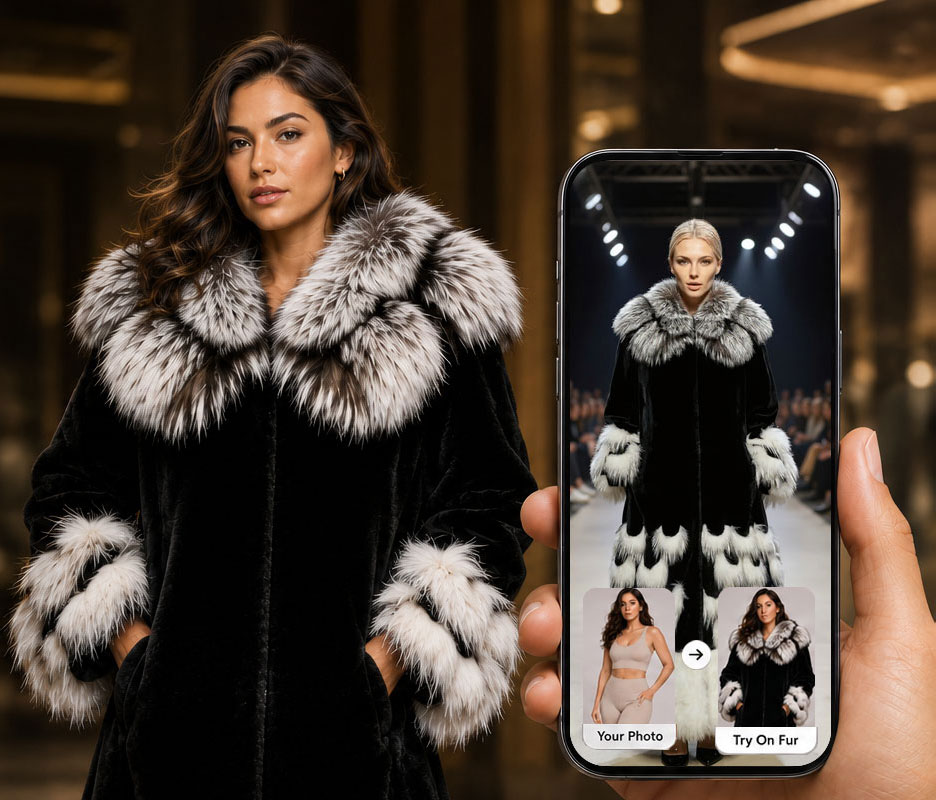
The styler can change the background to a snowy street, Central Park or a winter wedding, so you see it where you would wear it. Every picture keeps a small credit line at the bottom. The final fit and colour are settled at a fitting in our New York workroom.
Keeping It for Thirty Years
Looked after, mink outlives its first owner. Hang it on a broad padded hanger with air around it, never in plastic; keep it out of heat and sunlight; never spray perfume on it. Each spring it goes into cold storage, and a furrier cleans it every year or two. How to store fur explains why a closet in July does the damage a winter never will.
Questions
How can I tell if mink is good quality?
Press the fur flat and let go: good mink springs straight back, with an even, deep shine. Inside, the leather should be soft and the seams fine and regular. Dull, flat or stiff anywhere is a reason to walk away. See our full-length mink.
What does let-out mean?
Each skin is cut into narrow diagonal strips and re-sewn to run the full length of the garment, which gives the unbroken vertical shimmer. Horizontal mink uses whole skins in bands and is lighter and more casual. How let-out mink is made.
How long does mink last?
Twenty to thirty years of regular wear, and longer with cold storage each summer, cleaning every year or two, and a restyle when the shape dates. Storage, cleaning and repairs.
Every piece is made and fitted in our New York workroom, where we have been cutting mink since 1870. See the full-length mink coats, or try one on your own photo first.
Get our fur guides first. One tap tells Google to show Marc Kaufman Furs at the top of your own Top Stories, Discover feed and AI Overviews.
