Posted on

What Is Blackglama Mink? The World’s Most Famous Black Mink, Explained

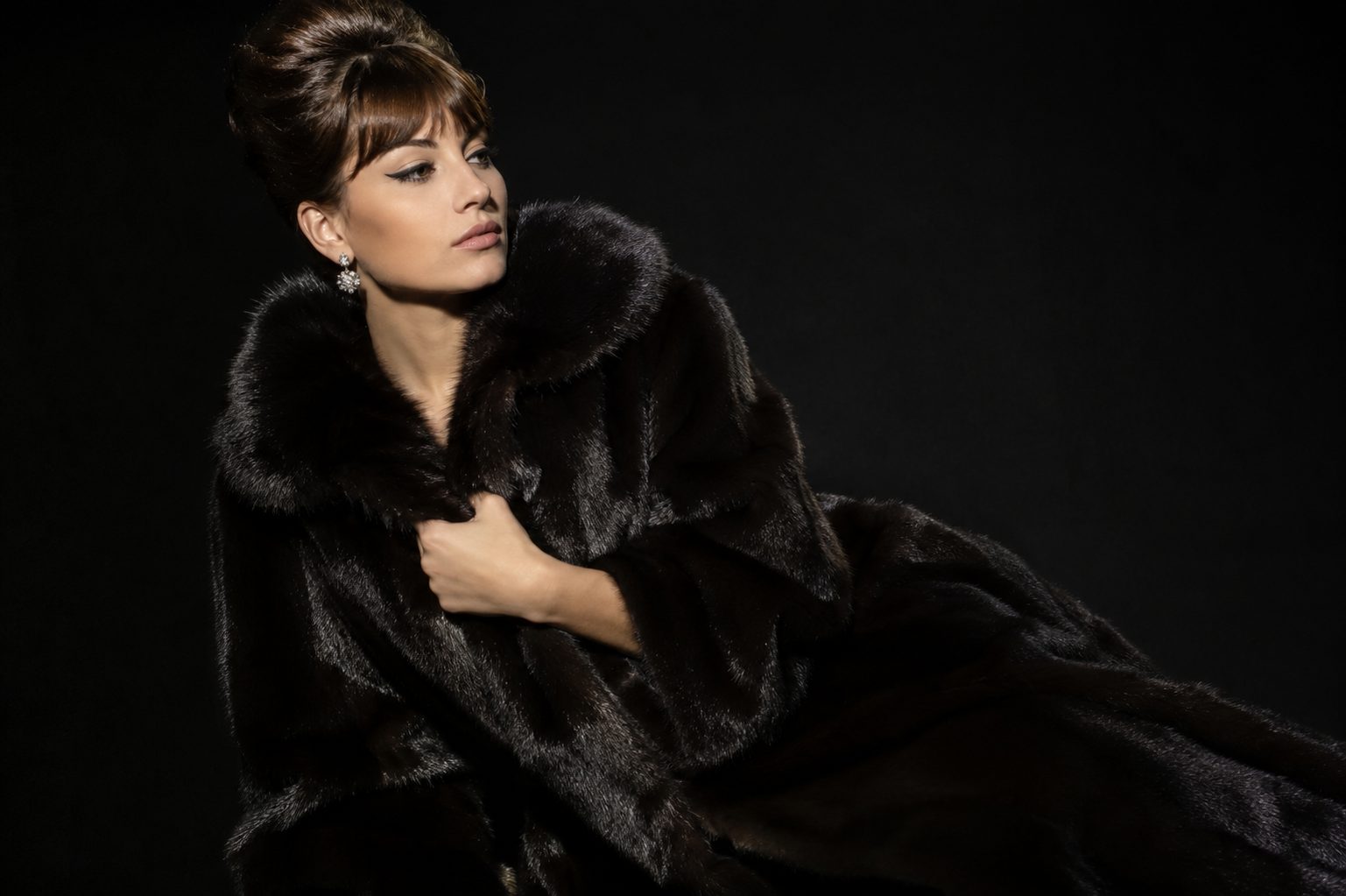
Full length natural black Blackglama mink coat with liquid sheen - what is Blackglama mink

What is Blackglama mink? It is the most famous name in fur — a trademark reserved for the finest natural black mink raised in North America. Blackglama is not a designer and not a farm: it is a grade. Only a small fraction of each season’s ranch mink is deep enough, silky enough and even enough to earn the Blackglama label, and every authentic Blackglama mink coat carries a numbered tag to prove it. Here is what makes Blackglama mink different, how the label became a legend, and how to recognize the real thing.

Where Blackglama mink comes from

The name dates to 1968, when the Great Lakes Mink Association — GLMA, the “glama” in Blackglama — set out to brand the very best of North American ranch mink. The standard has never changed: naturally deep brown-black pelts, never dyed, with dense underfur and short, perfectly even guard hair that gives the fur its liquid shine. Graders pull only the top pelts of the season; everything else sells as ordinary dark ranch mink. That selectivity is the whole point — Blackglama is a grade, and the grade is unforgiving.

What makes Blackglama different from ordinary black mink

Side by side, the difference shows. Much of the black mink sold today is dyed to reach a uniform jet color; Blackglama mink is natural — bred, not dyed, to a deep espresso-black that moves with the light instead of sitting flat. Because the color is natural it does not fade the way dyed fur can, and the leather beneath stays supple longer. The pelts are denser, the guard hair shorter and more even, the hand silkier. A Blackglama mink coat is, put simply, black mink with a pedigree.

The campaign that made it a legend
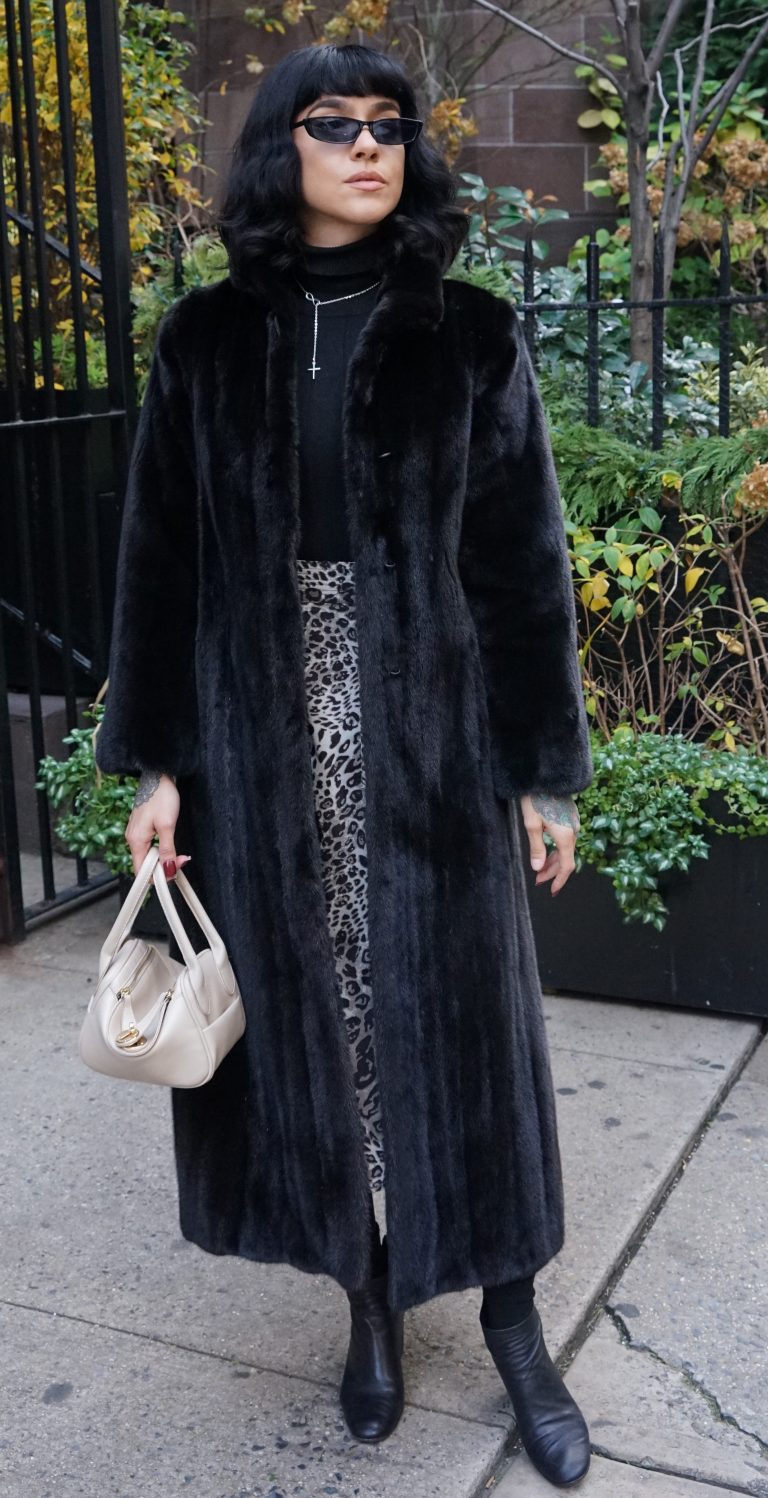
Classic full length Blackglama mink coat in natural black - Blackglama mink coat at Marc Kaufman Furs NYC
From our racks: the classic full length Blackglama

Blackglama would still be a graders’ term if not for the most celebrated campaign in fashion advertising. Beginning in 1968, “What becomes a Legend most?” dressed Judy Garland, Lauren Bacall and Bette Davis in Blackglama mink — the legends were famously paid not in money but with the coat itself — and the roll call grew to Elizabeth Taylor, Sophia Loren, Marlene Dietrich and Diana Ross, with Janet Jackson reviving the campaign decades later. The ads made Blackglama shorthand for glamour itself, and a Blackglama mink coat has carried that aura ever since.

How to tell a real Blackglama mink coat

Three checks. The label: authentic garments carry the Blackglama name with a serial number — no numbered label, no Blackglama. The color: natural deep brown-black that shifts in the light, not a flat, dyed jet. The hand: dense, cool and silky, with guard hair so even the surface reads like liquid. Buying vintage? Ask to see the numbered label before anything else — and bring it to a furrier who can verify the fur, not just the tag.

Is a Blackglama mink coat worth it?

If you want a black mink you will wear for decades, yes. Blackglama mink commands a premium over ordinary black mink, but the color never fades, the fur wears beautifully, and the name holds its value the way few furs do — these are the coats that come back to us as heirlooms, not castoffs. For how to judge any fur before you buy — construction, fit, provenance — our fur coat buying guide walks through it step by step.

Blackglama mink in New York
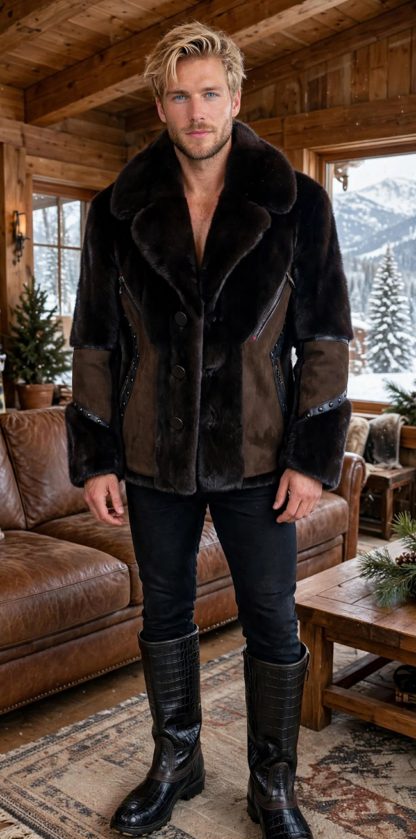
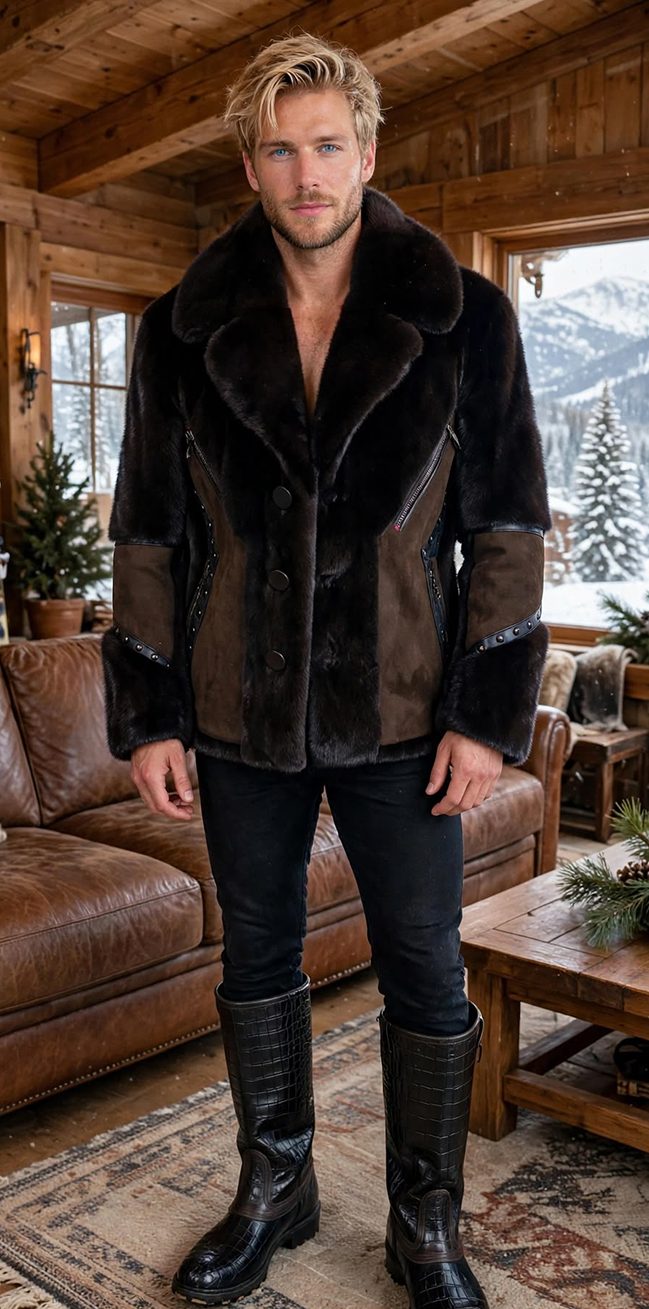
Mens Blackglama mink jacket with dark brown suede and studs - Blackglama mink jacket NYC
The modern cut: mens Blackglama, suede and studs

We keep one of the largest Blackglama selections in New York — ten Blackglama pieces on the racks as this is written, from a classic full length Blackglama mink coat to a men’s Blackglama mink jacket trimmed in suede and studs. Browse the black mink coats collection, call +1 (212) 563-3877, or visit the showroom at 212 West 30th Street and feel the difference in person. Marc Kaufman Furs has dressed New York since 1870 — legends optional.
Posted on

Rent or Buy a Fur Coat? When Fur Rental Makes Sense

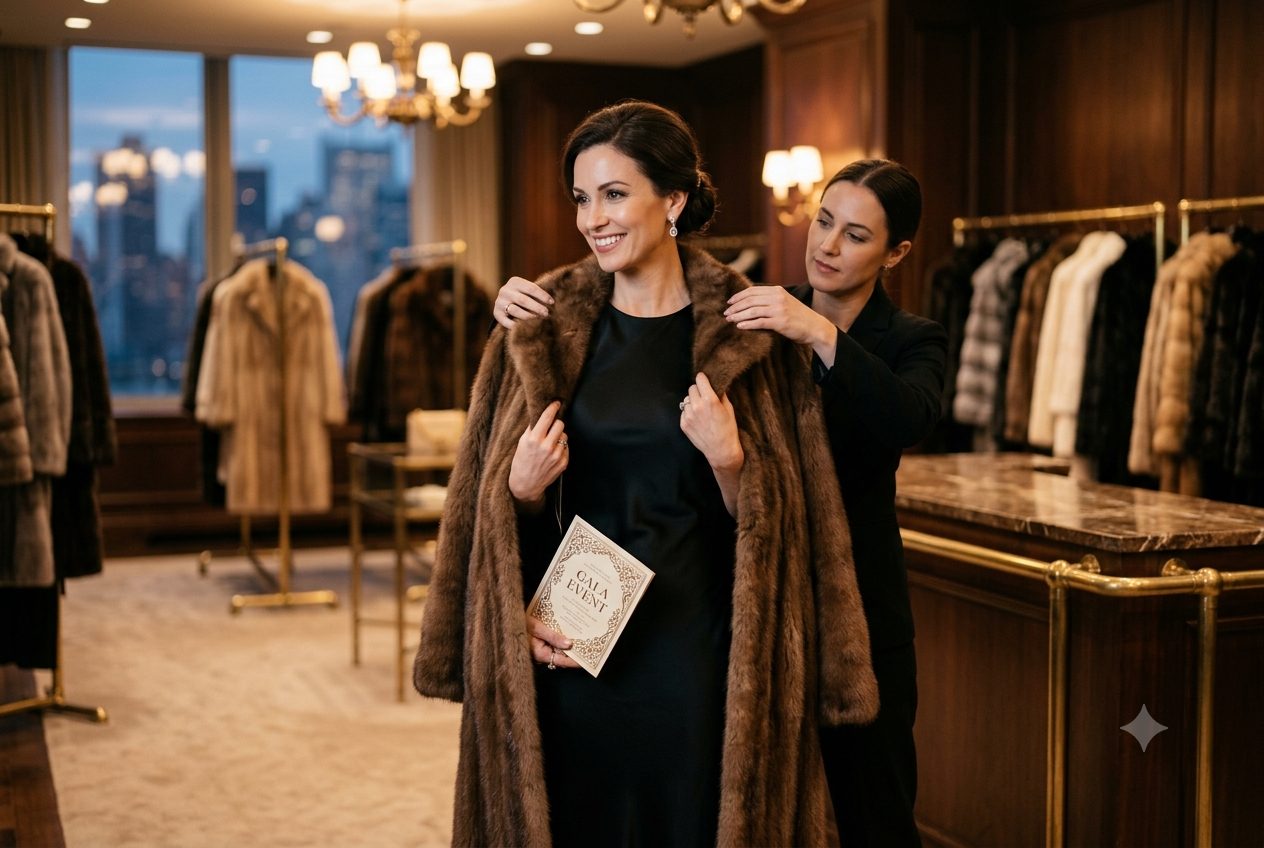
Woman trying on a rented mink fur coat for a gala in a New York furrier showroom — fur coat rental

Should you rent a fur coat or buy one? It is the first question we hear from brides, gala guests and stylists — and the honest answer is: it depends on how often the coat will be worn. As furriers who both sell and rent from one of the largest fur collections in New York, we can give you the answer without a sales pitch. Here is when a fur coat rental is the smart move, when buying wins, and how to rent a fur coat in NYC when the date is already on the calendar.

Full-length lynx coat worn by Jennifer Lopez in the film Hustlers - from the Marc Kaufman Furs collection, NYC
From these racks: the Hustlers lynx

When it makes sense to rent a fur coat

Statement floral mink stroller available to rent for photoshoots and editorial - fur rental NYC
Editorial statement: floral mink

Fur rental exists for the nights that matter once. If any of these sound like you, rent:

  • A wedding. A bridal wrap or a full fur over a gown photographs unforgettably — but a piece worn for one winter evening does not need to live in your closet forever. A fur coat rental for a wedding gives you the pictures without the purchase, and the bridal party can rent matching pieces for the day.
  • A gala, premiere or black-tie evening. When the invitation is once a year, renting a fur coat delivers the entrance at a fraction of the cost of owning it.
  • Photoshoots, film and music videos. Stylists and wardrobe departments rent almost by default — a shoot needs the piece for two days, not twenty years. That is why productions from editorial covers to feature films pull from rental racks.
  • Trying fur before you commit. Renting a mink coat for a weekend is the best possible test drive before investing in one of your own.
  • Travel. Flying somewhere cold for one week a year? Rent the warmth there is no room to store at home.

When buying beats renting a fur coat

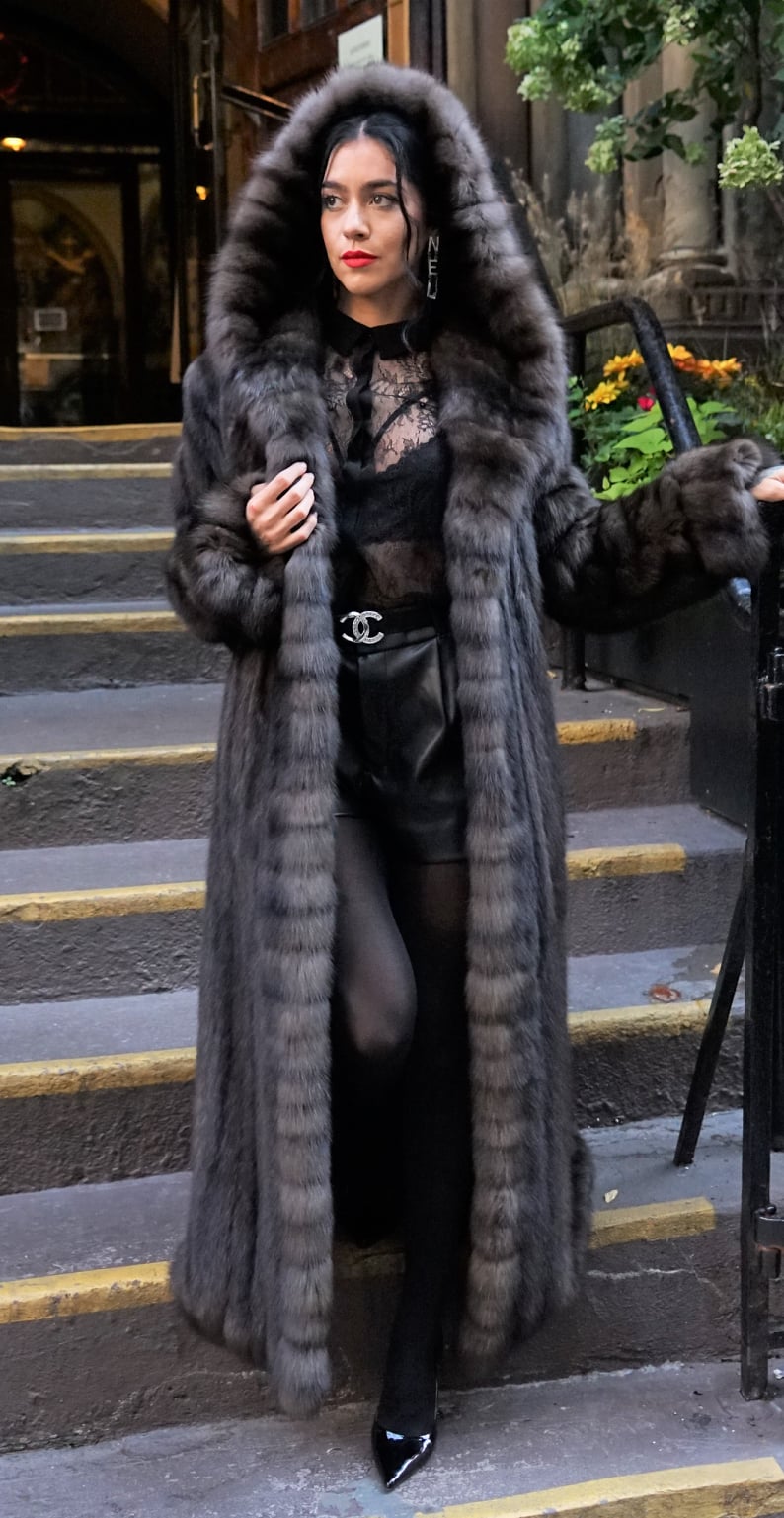
Full-length Russian Barguzin sable coat with hood - an investment fur to buy, not rent
Sable: the fur you buy

If the coat will be worn every winter, buy. A well-made mink is warm, durable and wearable for decades — rent that same piece ten times and you have paid for a meaningful part of it without owning anything. Buying also opens the doors rental cannot: custom sizing, restyling as fashion changes, and a piece that becomes an heirloom. If that sounds more like you, start with our fur coat buying guide, or browse the mink collection to see what ownership looks like.

How much does it cost to rent a fur coat?

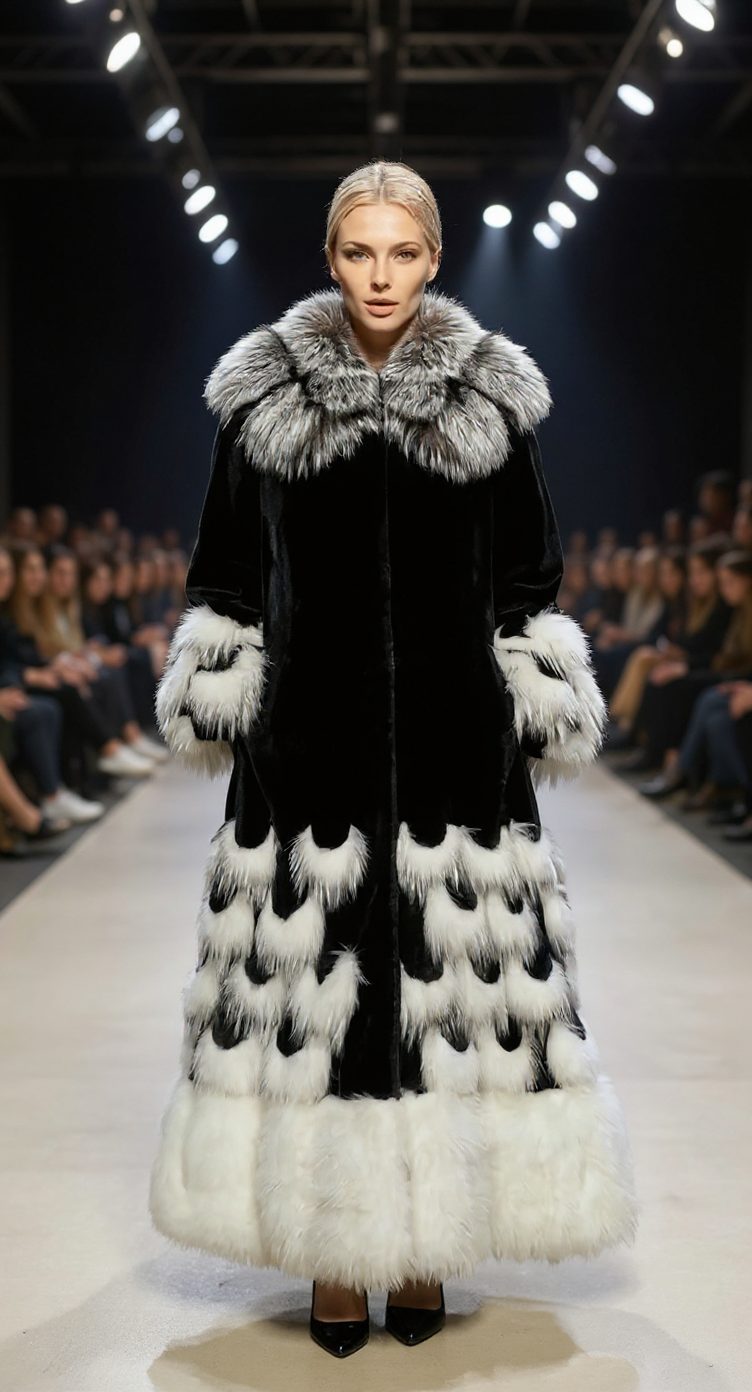
Full-length black mink coat with white fox collar and border - premium pieces sit at the top of fur coat rental pricing in NYC
Full-length statement pieces quote highest

Every fur coat rental is quoted individually, because three things drive the price: the piece (a rex rabbit jacket and a full-length mink sit at very different points), the length of the rental (an evening, a weekend, or a multi-week production hold), and how it will be used (a night at a gala is not a fashion shoot with lighting rigs). Send the dates and the look, and you get a real number rather than an estimate — no surprises, and rush requests are welcome.

How fur rental works in NYC

Plus size black diamond-cut mink jacket with fox collar - fur rentals fitted in all sizes at our NYC showroom
Fitted in every size

Our process is built for deadlines. Tell us the dates, the occasion and what you are looking for; we confirm availability and terms; then you fit the piece at our West 30th Street showroom — or for productions, we can arrange messenger delivery in New York City and nationwide shipping when the schedule allows. The rental collection spans mink, fox and rex rabbit in every length, in women’s and men’s sizes, from classic naturals to statement colors. See what is on the racks and check your dates on our fur rentals page.

Renting a fur for a wedding?

Snowtop fox fur shrug for a winter wedding - bridal fur rental NYC
The bridal wrap: snowtop fox

Winter brides are half of this business. Wraps, capes and stoles rent beautifully for a ceremony, and they photograph even better — see our bride’s guide to winter wedding furs for how to style them, or browse the wedding furs collection. Then send us the date; December Saturdays book out first.

The takeaway

Mens Blackglama mink jacket with suede and studs - buy the fur that earns its place every winter
Rent the night. Buy the winters.

Rent a fur coat for the once-a-year night, the shoot, the wedding, the test drive. Buy when the coat will earn its place every winter. Either way the fur is real, the fit is checked by furriers, and the piece has probably already been photographed on someone famous. Ready to check your dates? Start at fur rentals, call +1 (212) 563-3877, or visit the showroom at 212 West 30th Street — renting a fur in New York has worked this way since 1870.

Writing about fur rentals for a story or production? Our press kit and media contact are here.

Posted on

What to Wear in Aspen: The Après-Ski Wardrobe, Fur & More

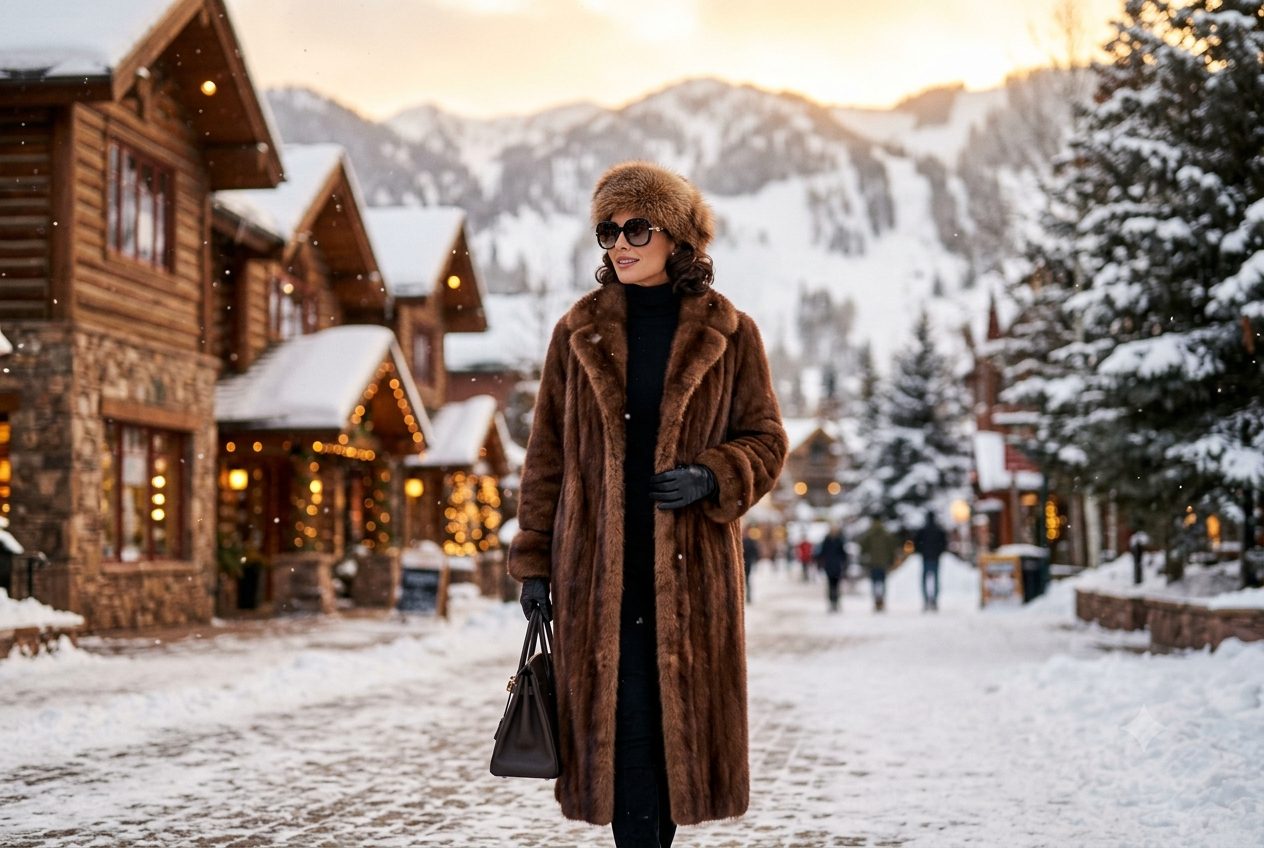
Woman in a luxury fur coat and après-ski outfit in snowy Aspen

Aspen has a dress code no one prints, but everyone follows. It’s the place where a fur coat isn’t a statement so much as a uniform — worn to dinner at the Little Nell, to a fireside drink at Cloud Nine, walking the village after the lifts close. The fur is the easy part. The question is what goes with it. Here’s how the people who actually winter in Aspen build the wardrobe around it — and the one mistake that gives a first-timer away.

The one rule: fur is for the village, not the slopes

This is the tell. Real regulars never ski in fur — they ski in technical gear and save the fur for everything else: the walk to lunch, the après-ski scene, dinner, the late drink. A fur coat on a chairlift reads as a tourist; a fur coat at the bar at Ajax Tavern reads as someone who belongs. So think of your fur as your off-mountain wardrobe, and dress the rest of the trip around it.

Start with the layers underneath

A fur is warm enough that what goes under it can be light and refined rather than bulky. The Aspen base layer is quiet luxury: a fine-gauge cashmere turtleneck, a silk or merino thermal, tailored trousers or dark denim. The trick is that everything under the fur stays slim, so the coat drapes cleanly and does the talking. Save the chunky knits for the lodge; under a full-length mink or a lynx coat, less is more.

The accessories that finish the look

Cold and altitude make accessories functional as well as beautiful, which is exactly why Aspen is where they matter most.

  • A fur hat or headband — the single most Aspen accessory there is. A fox fur headband keeps your ears warm and pulls the whole look together, and it travels far more easily than a second coat.
  • Gloves — cashmere-lined leather, long enough to meet the sleeve. Function first; the mountains are not the place for thin fashion gloves.
  • Oversized sunglasses — glacier glare is real, and dark oversized frames are the après-ski signature.
  • A silk or cashmere scarf — for the walk from the car to the restaurant, and to soften a big fur collar.

Footwear: where a lot of people go wrong

Stilettos on ice end one way. The Aspen answer is a luxury shearling-lined boot or a sleek snow boot with real grip — something you can actually walk the village in, that still looks considered next to a fur. Keep the heels for the interiors that valet you to the door.

Day versus night: two different wardrobes

Daytime in Aspen is functional-luxury — base layers, a vest or a shorter fur, boots, sunglasses, moving between the mountain and long lunches. Evening is when the fur earns its keep: a full-length mink or a fur cape over something simple, and you’re dressed for anywhere the night goes. Packing one statement coat plus a more versatile piece covers the whole trip.

Which fur to actually bring

If you’re only bringing one, make it versatile: a fur vest layers over a sweater by day and under a coat at night, and it packs flat. If you’re bringing the statement piece, a full-length mink, fox or lynx is the classic Aspen coat — dramatic, genuinely warm, and photographs beautifully against snow. Not sure which fur handles the cold best? See our guide to the warmest furs for winter. And whatever you bring, store it properly when you’re home so it’s ready for next season.

Packing it: keep it simple

Fur doesn’t love being crushed, so it’s the one thing you carry rather than check when you can — on a padded hanger, or laid flat on top. Everything else compresses around it. The goal isn’t a huge suitcase; it’s a small, considered one built around a single beautiful coat.

The takeaway

Aspen style is quieter than people expect. The fur does the work; everything else — the cashmere, the boots, the fox headband, the sunglasses — just gets out of its way. Get that balance right and you’ll look less like you’re visiting and more like you never left.

Building your winter wardrobe around a fur that will last decades? Browse the collection, or get in touch and visit our West 30th Street showroom — we’ve been dressing New Yorkers for the mountains, and the city, since 1870.

Posted on

Men’s Fur Coats: How to Choose the Right Fur, Style and Fit

Men’s Fur Coats: How to Choose the Right Fur, Style and Fit

A man’s fur coat is one of the few garments that still reads instantly as success. It’s also one of the most misunderstood purchases in menswear — most men buy their first fur with no idea which fur suits them, what silhouette works for their build, or what actually drives the price. This guide fixes that: how to choose a men’s fur coat, which furs suit which man, what fur coats for men actually cost, and how one should fit. Marc Kaufman Furs has been dressing men in fur in New York City’s fur district since 1870, and what follows is what we tell customers in the showroom.

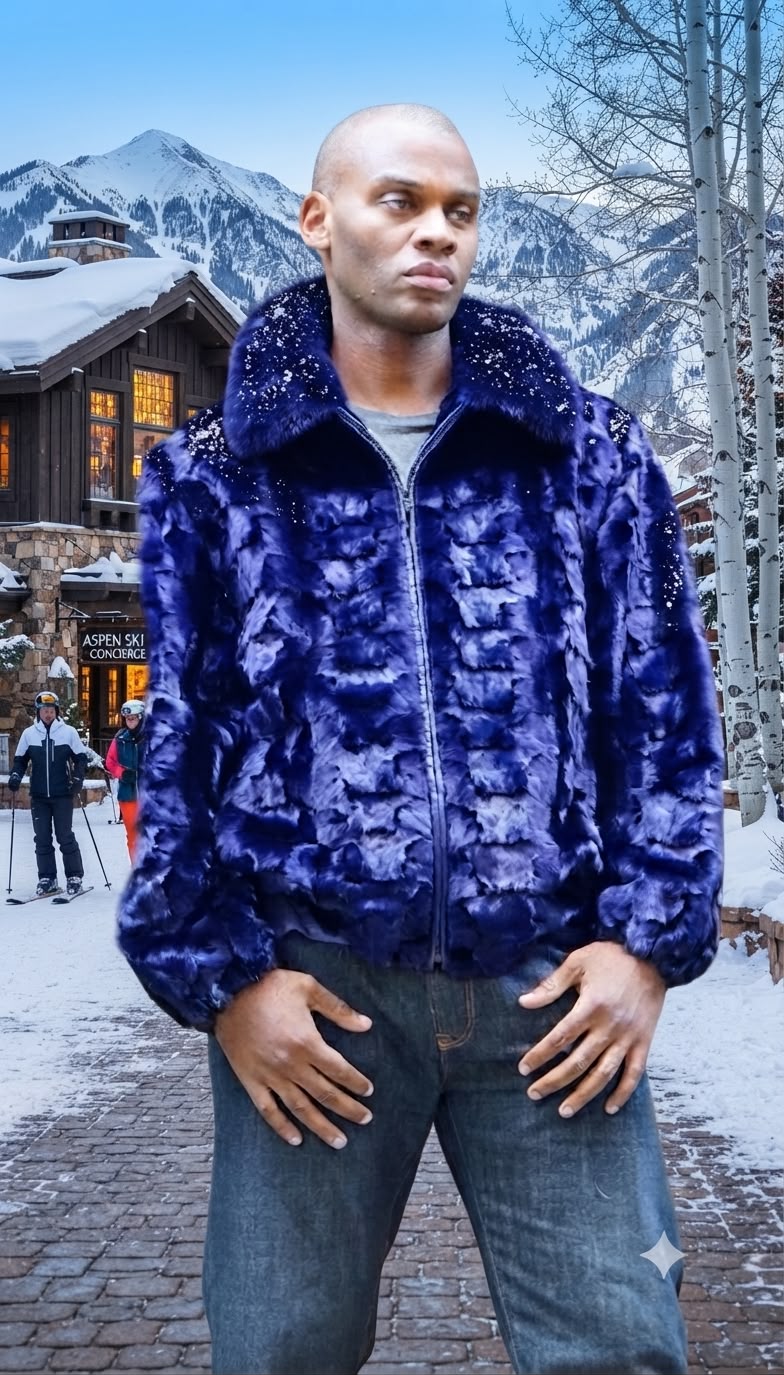
Men's royal blue diamond-cut mink fur jacket — Marc Kaufman Furs, NYC
Men’s royal blue diamond-cut mink fur jacket — Marc Kaufman Furs, NYC

Which fur is right for a man?

Fur type is the first decision, and it changes everything about how a coat wears, lasts, and reads.

  • Mink — the benchmark. Lightweight for its warmth, naturally water-resistant, and durable enough to last decades. A men’s mink coat is the safe, timeless choice, and it’s what most men end up in. Explore men’s mink coats.
  • Chinchilla — the flex. The softest, rarest fur in the world, with an unmistakable silver-grey depth. Chinchilla is what men buy when they already own mink and want something people notice. See men’s chinchilla.
  • Sable — quiet money. The most prestigious fur made, and the most understated: silky, lightweight, and recognisable only to people who know. Browse sable.
  • Fox — presence. Long-haired, plush, and dramatic. Fox reads bold rather than conservative, which is exactly why it dominates our men’s collection. See men’s fox coats and jackets.
  • Lynx — the collector’s piece. Rare, snowy-white belly fur with soft dark spotting; unmistakable and exclusive. See lynx.

Still deciding between the two most common? Read mink vs. fox — what’s the difference, or which fur is warmest if you’re buying for real cold.

Men's black and white mink fur bomber jacket — Marc Kaufman Furs, NYC
Men’s black and white mink fur bomber jacket — Marc Kaufman Furs, NYC

Men’s fur coat styles: bomber, stroller, or full-length?

Silhouette matters more than most men expect — it’s the difference between a coat that gets worn constantly and one that stays in the closet.

  • Fur bomber jacket — the modern default, and the most-worn style we sell. Waist-length, easy over jeans or a hoodie, and far less formal than a long coat. If it’s your first fur, start here.
  • Stroller — hip to mid-thigh. The versatile middle ground: enough coat to wear over a suit, short enough to drive, sit and move in. A men’s mink stroller is the workhorse of a fur wardrobe.
  • Full-length coat — maximum warmth and maximum presence. This is the statement piece, best over tailoring and for men comfortable being looked at.
  • Fur vest — the layering option. Works under an overcoat or over a knit, and the easiest entry point for a man unsure about full fur. See fur vests.

How should a men’s fur coat fit?

Fur is cut differently from cloth, and a good furrier fits it differently too. The shoulder should sit clean with no pull — that’s the one thing that can’t be easily altered. Allow room to layer a jacket or knit underneath; a fur worn over a suit needs more through the chest than one worn over a t-shirt. Sleeves should end at the wrist bone, and the coat should hang straight without flaring when it’s closed. Almost everything else — length, sleeves, the fit through the body — can be adjusted by a furrier, so buy for the shoulders and have the rest tailored.

What does a men’s fur coat cost?

Price is driven by four things: the fur itself (sable and chinchilla sit at the top, mink in the middle, fox and rex more accessible), the quality and matching of the pelts, the amount of workmanship — a let-out coat takes far more labour than a skin-on-skin one — and the length. A full-length sable and a fox bomber are not remotely the same purchase. Because pelt quality and workmanship vary so widely, many fine pieces are offered on a consultation basis rather than a fixed price, which is also how you avoid overpaying for a name. Ask what grade the pelts are and how the coat is constructed — a real furrier will tell you plainly.

Buying a fur that lasts

A well-made men’s fur should last decades, and the difference between one that lasts fifteen years and one that lasts fifty is care and craftsmanship. Buy from a furrier with an in-house workroom, so the coat can be altered, restyled and repaired for life rather than shipped out. Have it cleaned and glazed each season and stored properly in the off-season — here’s how to store a fur coat. And if you inherit one, don’t assume it’s dated: a furrier can recut an old coat into a modern bomber or stroller for a fraction of buying new.

A fur house men have worn for 150 years

Men’s fur isn’t a sideline for us — it’s a specialty. Since 1870 we’ve dressed athletes, musicians and performers from our workroom in the fur district: Joe Namath’s Super Bowl coyote jacket, Tyson Fury’s full-length chinchilla, and pieces worn by Snoop Dogg, 50 Cent, Post Malone and Rick Ross among many others. That heritage shows in how our men’s pieces are cut — tailored for a masculine line, with collars, hoods and lengths chosen to flatter rather than overwhelm. It’s why a Kaufman fur reads as confident, never costume.

Where to start

Browse the full men’s fur collection — mink, chinchilla, sable, fox and lynx in bombers, strollers, jackets and full-length coats. Fur has to be tried on to be understood, so the best first step is to visit our showroom at 212 West 30th Street in New York and feel the difference between grades in person. Or get in touch and we’ll help you find the right piece — including custom and made-to-order, sized to you.

Posted on

What to Do With an Old or Inherited Fur Coat

Maybe you inherited it from your mother or grandmother. Maybe you found it at the back of a closet, or your own coat has started to feel dated. Whatever brought you here, don’t do the one thing you shouldn’t: throw it away. A real fur coat — even an old one — is a valuable, repairable, and surprisingly versatile thing. And with vintage fur more in demand than it’s been in decades, there have never been more good options for what to do with it. Here are the five best things to do with an old or inherited fur coat.

First: don’t assume it’s worthless (or ruined)

Fur is built to last — a well-made mink or fox coat can survive fifty years or more with basic care. Before you decide anything, look it over. Is the leather (the skin side, underneath the fur) still supple, or is it dry and cracking? Does the fur feel soft, or brittle and shedding? Gently bend a section: healthy fur flexes; a coat that’s been baked in a hot attic for decades may crack. Even a coat that seems past its prime is often restorable — and even one that truly is can be repurposed. When in doubt, a furrier can assess it in minutes, usually for free.

1. Restyle or remodel it — turn it modern

This is the best-kept secret in fur, and usually the smartest move. A skilled furrier can transform a dated coat into something you’ll actually wear: shorten a long, heavy coat into a chic jacket or stroller; turn a coat into a vest; restyle a boxy 1980s silhouette into a fitted modern cut; add a hood, update the collar and sleeves, or reline it in a fresh color. Because the fur (the expensive part) already exists, remodeling costs a fraction of buying new — you’re mostly paying for the craftsmanship. If the fur has good years left in it, this is how you get a “new” coat for a fraction of the price. See fur remodeling and restyling.

2. Restore it — clean, condition, repair

Sometimes a coat doesn’t need reinventing — it just needs a refresh. Professional fur cleaning and glazing removes years of dust and oil and brings the shine back, while conditioning keeps the leather supple. Small tears, loose seams, worn cuffs, and a tired lining are all routine repairs for a furrier’s workroom. A good clean and a few repairs can take a coat that looks “old” and make it look simply classic again — for very little money.

3. Wear it as-is — vintage fur is having a moment

If your coat is in good shape, the simplest option might be to just wear it. Vintage fur is more fashionable right now than it has been in years, and an inherited piece carries something a new coat never can: history. A grandmother’s mink worn with jeans and boots reads as effortless, personal, and unmistakably real. Have it cleaned, make sure the closures work, and wear it with confidence. (And once you do, protect it — here’s how to store a fur coat so it lasts another generation.)

4. Sell or consign it

If it’s simply not for you, a quality fur can find a new home rather than a landfill. There’s a real market for pre-owned and estate furs, and a furrier can help you understand what a piece is realistically worth and how best to sell or consign it. It’s the practical, sustainable alternative to letting a good coat sit unused — someone out there is looking for exactly what you have. Browse our own estate and pre-owned furs to see the kind of pieces that find second lives.

5. Repurpose it — keep the sentiment, lose the coat

For a coat that’s too damaged to restore, or one you’re keeping purely for sentiment, the fur itself can live on in a new form. Furriers regularly turn old coats into pillows, throws, blankets, teddy bears, hats, collars, and trim — small keepsakes that hold the memory without hanging unused in a closet. It’s a meaningful way to pass a piece of a loved one down to the next generation.

The most sustainable fur is the one that already exists

There’s a bigger idea underneath all of this. In an era focused on sustainability, restyling, restoring, and rewearing furs that were made decades ago is about as responsible as fashion gets — no new resources, nothing sent to a landfill, a beautiful garment kept in use for another lifetime. Reusing what already exists is the greenest choice you can make, and it’s exactly what furriers have quietly done for over a century.

Not sure where to start? Bring it in

The easiest first step is simply to have a furrier look at it. At Marc Kaufman Furs, we’ve been restyling, restoring, and caring for furs in New York City’s fur district since 1870 — five generations of it. Bring in (or send us a photo of) your old or inherited coat and we’ll tell you honestly what it is, what condition it’s in, and which of these options makes the most sense. Request a quote or an assessment, or visit our West 30th Street showroom — there’s a good chance your coat has far more life in it than you think.

Looking for a fur of your own? Our mink coats, mink jackets, fox fur coats, chinchilla coats and sable coats are made and fitted in our New York workroom, and you can see any of them on your own photo with the free virtual fur try-on.

Posted on

Winter Wedding Furs: A Bride’s Guide to Fur Wraps, Capes & Stoles

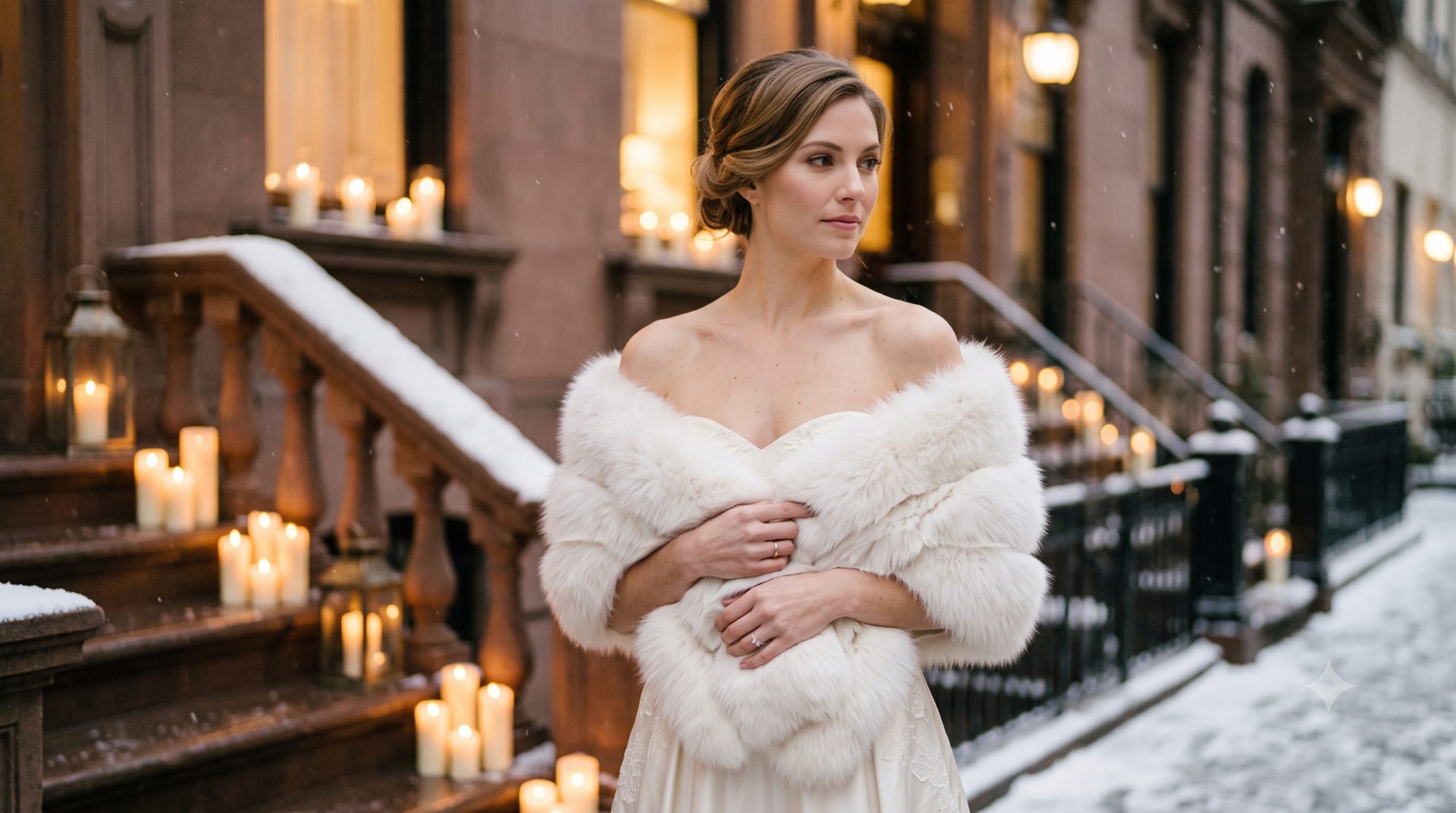
…an elegant bride with a plush white fox fur stole wrapped around her shoulders over a strapless ivory gown, snowy candlelit winter wedding, soft romantic lighting…

A winter wedding gives you snow on the steps, candlelight inside and a cold walk between the two. The dress was not made for the cold, and a good winter wedding fur is how you wear it outdoors without a borrowed coat over the top.

This guide covers the four shapes brides ask us for, how to match one to your gown, and how to see it on yourself before a fitting.

Why Fur Belongs at a Winter Wedding

A gown is built to be seen, not to keep you warm. Fur insulates without bulk, so the shoulders stay warm through outdoor photographs and the send-off while the bodice and neckline stay in view. It photographs beautifully too: white fur catches light in a way a wool coat never does, which is why so many of our brides choose a piece from the Wedding Furs collection for the photographs alone.

Choosing Your Bridal Fur: Stoles, Capes and Shrugs

Which piece suits you depends on the neckline, how much coverage you want, and whether you will be outside for long. The four we are asked for most are below, each with real pieces from the collection.

Bridal Fur Stoles and Wraps

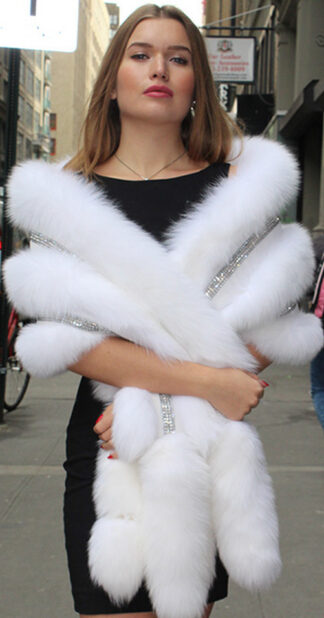
A stole is a straight band of fur worn across the shoulders or over the arms; a wrap is the same idea, cut wider. It is the classic choice for strapless and off-the-shoulder gowns, because it frames the neckline instead of hiding it. A bridal fur stole in white mink is quiet and sleek; white fox gives more volume.

Woman in a black dress wearing a white shadow mink stole across her shoulders, holding a glass of red wineFull white fox stole draped over the shoulders of a black satin slip dressLong white fox boa wrapped around the shoulders and falling to the knee
Left to right: the white shadow mink stole, the evening white fox stole and a white fox boa.

Fur Capes and Capelets

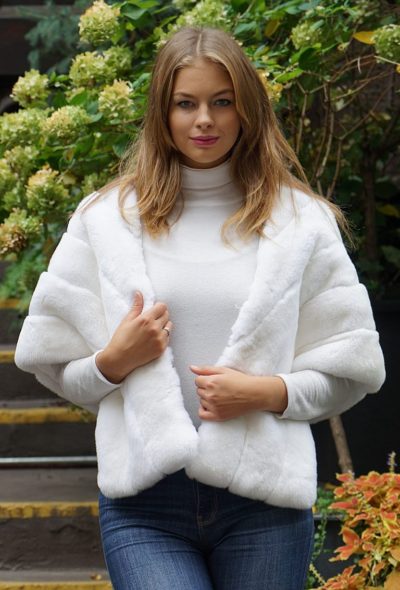
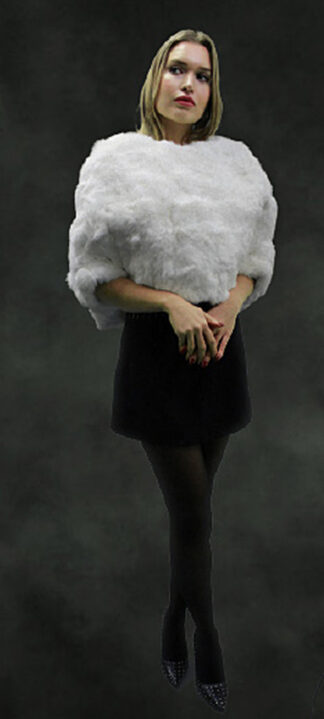
A cape falls over the shoulders and down the back; a capelet is the short version, ending at the elbow or above. For a cathedral-length train or a grand venue, a fur cape for a wedding adds a line from the shoulders down that a stole cannot. Rex rabbit is the lightest fur for it, sheared so short it feels like velvet.

Short white rex rabbit capelet worn open over a white turtleneckWhite rabbit capelet in horizontal bands covering the shoulders and upper armsFluffy white rex rabbit capelet over a short black dress
Three white capelets from the Wedding Furs collection, each short enough to leave the bodice of a gown in view.

Shrugs, Jackets and a Coat for the Send-Off

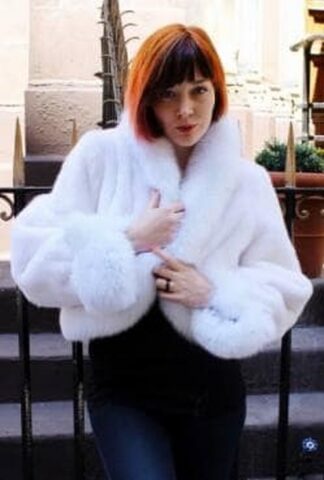
A shrug or bolero is a cropped piece that covers the shoulders and upper arms, for sleeveless and spaghetti-strap gowns. It is the warmest of the wedding fur cover-ups and the easiest to wear all evening. For a long outdoor send-off, a full-length white mink coat over the dress is the answer nobody regrets.

Bride in a lace gown and veil wearing a full snowtop fox shrug around her shouldersCropped white sheared mink jacket with a white fox tuxedo frontFull-length white mink coat with a tie belt, worn on a snowy street
For the arms and the send-off: the snowtop fox shrug, a white mink jacket with a fox tuxedo front and a full-length white mink coat.

Matching Your Fur to Your Dress

White, ivory and champagne tones suit almost every gown, and our furriers can match a piece to the dress, so bring a swatch to the fitting. Pure white suits a pure white gown; a warmer ivory sits better against ivory or blush. Our white mink pieces show how much the shades vary.

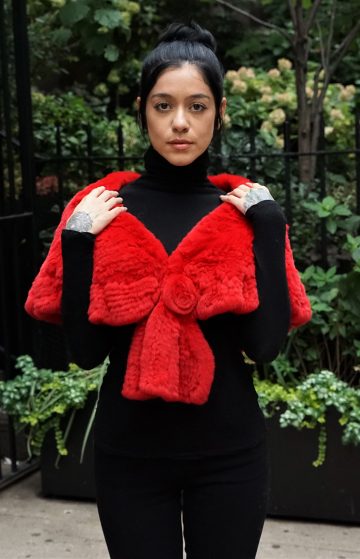
For a winter bridal party, colour works well: matching capelets for the bridesmaids in the wedding palette, or a deep red or black for a December evening. Most pieces in the capes and knits collection come in several colours.

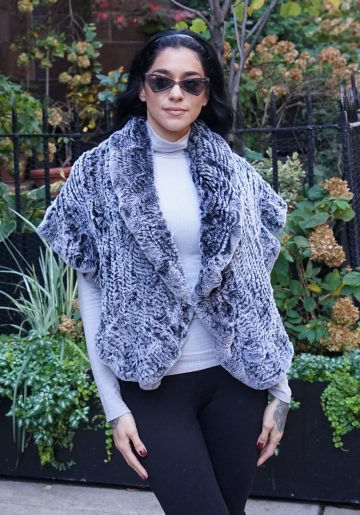
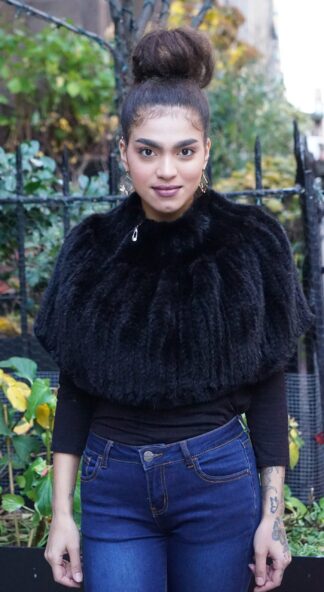
Red rex rabbit capelet tied with a bow at the front, worn over blackGrey and white knit rex rabbit capelet draped over a white topBlack knit mink capelet with a side zipper, worn with jeans
Colour for a winter bridal party: a red rex rabbit capelet, a grey knit rex capelet and a black knit mink capelet.

See It on Yourself Before the Fitting

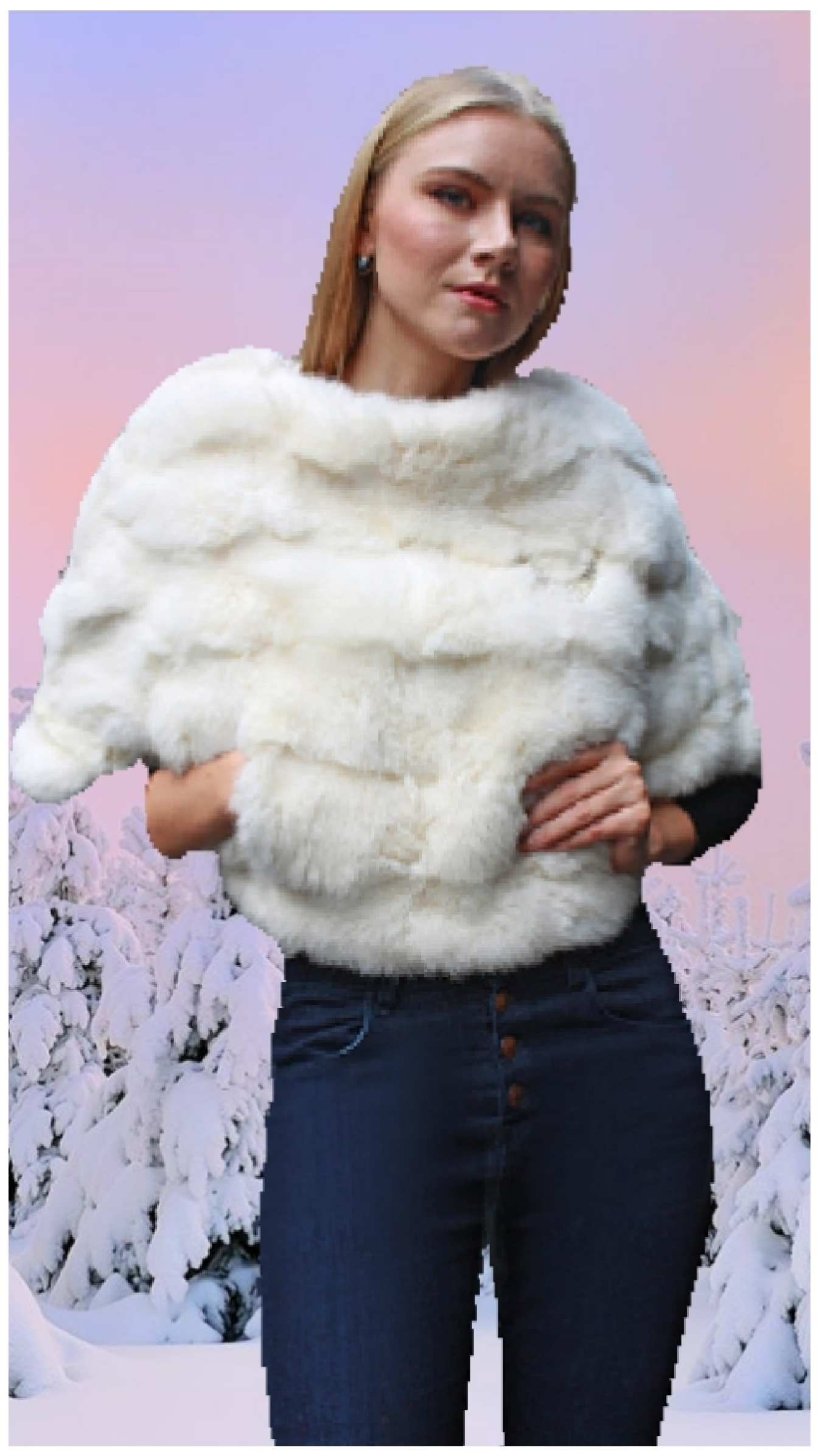
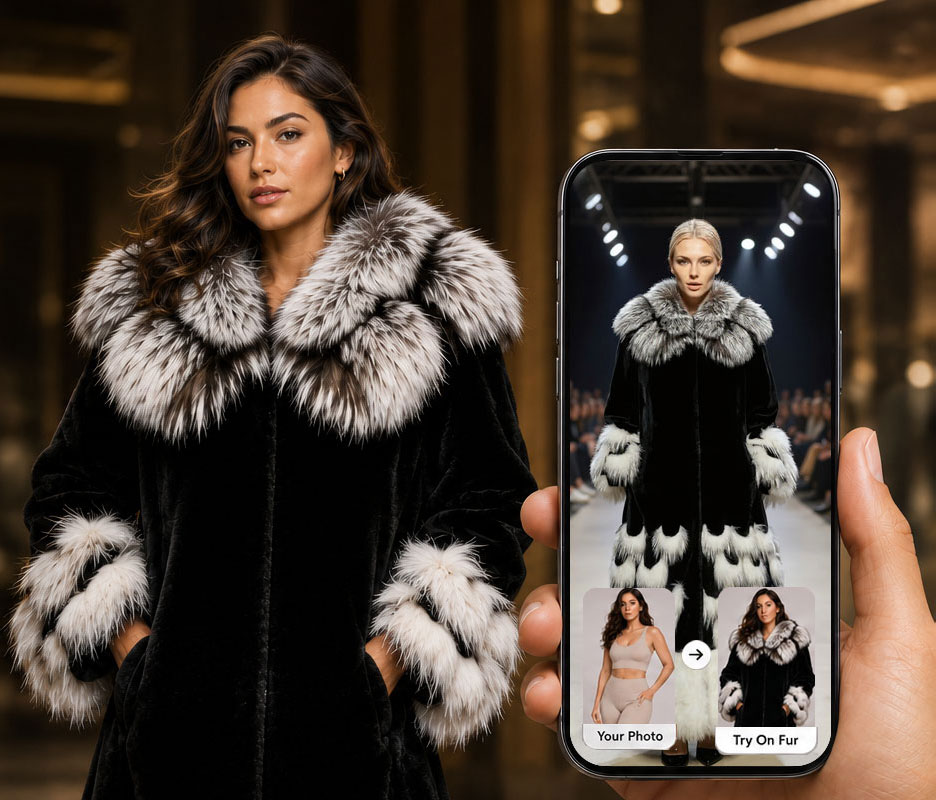
Our virtual fur try-on puts any piece from the site onto a photograph of you. Upload one taken straight on, in good light, and the stole, capelet or shrug appears on your own shoulders. It is free, needs no account, and everyone gets three try-ons a day.

A woman in a fur coat beside a phone showing the same coat placed on a customer's own photograph
Try any piece on your own photograph, free, in about a minute.

The styler can also change the background to a winter wedding scene, so you see the piece in the setting it was chosen for, not on a plain wall. Every picture keeps a small credit line at the bottom. It shows how a piece suits you; colour and fit are settled at the fitting.

Real Fur or Faux on the Day?

Faux fur is cheap and everywhere, and for one cold afternoon it can look fine. The difference shows up close: real fur moves, catches light and keeps you warm, where most faux is plastic and warms nobody. We wrote up the full comparison if you are weighing it.

A real stole is also an heirloom. Stored properly it lasts decades and is often worn by the next bride in the family, where faux ends up in a landfill within a few years; our post on the landfill legacy of fake fur covers why.

Buy, Rent or Custom-Make

Not sure you will wear it again? We offer bridal fur rentals alongside pieces to keep. For something nobody else has, we make one to your measurements in our New York workroom, in the fur and colour of your choice, cut to sit right over your gown. Allow time for a fitting before the date.

After the wedding, the piece needs cold, dark storage between winters. We store and clean furs every summer, so it looks the same the next time it comes out.

Wedding Fur Questions

What is the best fur for a winter wedding?

White mink reads sleek and quiet, white fox gives volume and softness, and rex rabbit is the lightest and most affordable. The right one depends on the neckline of the gown and how long you will be outside. See the bridal pieces.

Can I rent a fur for my wedding day?

Yes. If you would rather not keep it, we rent bridal furs as well as selling them, and we can make one to your measurements if nothing fits the gown. How fur rental works.

How do I keep warm in a strapless wedding dress?

A stole or wrap covers the shoulders and leaves the gown in view; a capelet adds a line down the back; a shrug or bolero covers the upper arms as well. All three come off in a second for the first dance. Capes and capelets.

What do I do with the fur after the wedding?

Store it in cold, dark storage between winters and it will look the same at your daughter’s wedding. Never keep it in plastic or a hot closet. How to store fur.

Every piece is made and fitted in our New York workroom. Shop the Wedding Furs collection or try one on your own photo first.

Posted on

The Most Expensive Furs in the World

The New Era of Ultra-Luxury Outerwear: Why Chinchilla, Lynx, and Sable Prices Are Experiencing a Historic Surge

Not all fur is created equal. A handful of furs sit at the very top of the market, commanding prices that reflect their rarity, the difficulty of working them, and centuries of prestige. Here are the most expensive furs in the world — and what makes each one worth it.

1. Russian sable — the king of furs

Russian sable has been the most coveted fur for centuries, once reserved for royalty. Its guard hairs are so silky the fur feels like liquid, it’s feather-light, and it has a unique quality: it runs smoothly in every direction. Wild Russian sable, especially with a silver cast, is the single most expensive fur you can buy. Explore sable coats and jackets.

2. Chinchilla — the softest fur on earth

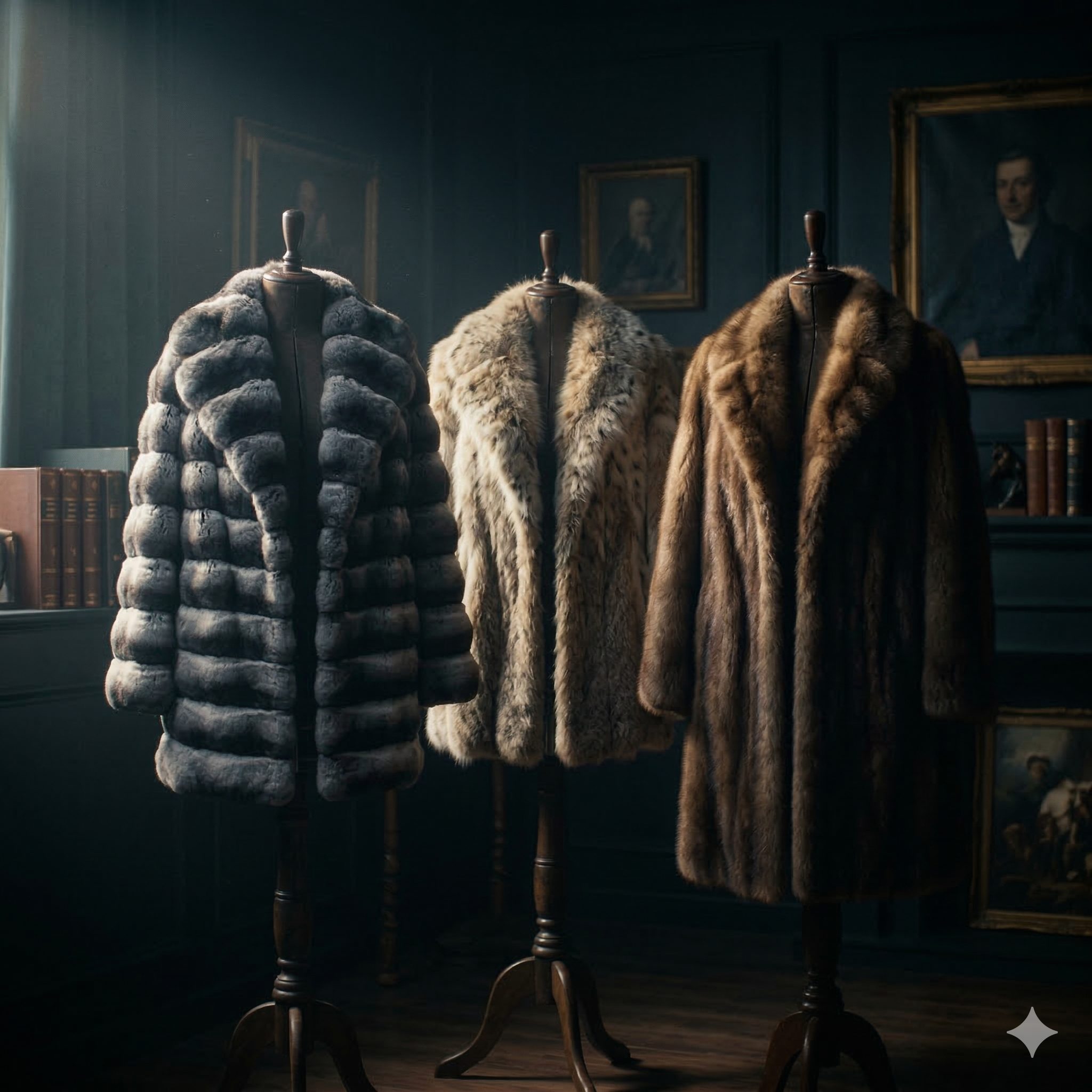
Chinchilla has the highest hair density of any land animal — around 60 hairs from every follicle — which gives it an almost impossibly soft, cloud-like feel. The pelts are tiny and the shading (silver to slate) must be matched by hand, so a full chinchilla coat represents enormous skill and cost. See our chinchilla collection.

3. Lynx — rare and unmistakable

Fine lynx, with its creamy fields and soft charcoal spotting, is prized for a pattern no two pelts share — and it grows scarcer every year, which keeps prices high. Explore lynx coats and jackets.

Where mink and fox fit

Mink and fox are the most popular fine furs precisely because they offer luxury at a more attainable price than sable or chinchilla — mink for its durability and timelessness, fox for its drama and color. They’re where most collectors begin.

Buying at the top of the market

The rarest furs are also the ones you should never buy without expert eyes — quality varies enormously, and matching and workmanship make all the difference. Marc Kaufman Furs has sourced and crafted the world’s finest furs in New York City since 1870. Contact us or visit our showroom to see them in person.

Posted on

How to Store a Fur Coat

Professional fur cleaning process by a master furrier using anti-bacterial agents for luxury garment restoration in New York.

A fur coat is an investment that can last decades — but only if it’s stored properly. More furs are ruined by bad storage than by wear. Here’s how to protect yours, what to avoid at home, and why professional cold storage exists.

What damages fur

Fur has four enemies: heat (which dries out the leather backing and makes it crack), light (which fades and oxidizes the color), moisture and humidity (which breed mold and mat the fur), and moths and pests (which feed on the hair). A typical home closet exposes fur to most of these year-round.

Why your closet isn’t enough

Storing fur in a home closet — especially over the warm months — is the most common mistake. Room temperature is far too warm, the air is too dry or too humid, and garment bags trap moisture against the pelts. Cedar and mothballs don’t solve the underlying temperature and humidity problem. A fur left in a closet all summer can lose years of life in a single season.

Professional cold storage

Proper fur storage means a climate-controlled vault held at around 45–55°F with controlled humidity — cold enough to slow the natural breakdown of the leather and stop pests, humid enough to keep the pelts supple. This is what a furrier’s storage facility provides, and it’s why fur owners store their coats professionally every off-season rather than at home.

Between seasons and day to day

When your fur is in use, hang it on a broad, padded hanger with room to breathe — never in a plastic bag, and never crushed between other clothes. Keep it away from radiators, direct sun, and perfume. And have it professionally cleaned and glazed once a year to remove oils and restore luster.

Store your fur with specialists

Marc Kaufman Furs has provided professional fur cleaning, glazing, repair, and cold storage in New York City since 1870 — for our own furs and for any fur you own. Learn more about our fur storage, cleaning, and repair services, or contact us to arrange off-season storage.

Looking for a fur of your own? Our mink coats, fox fur coats, chinchilla coats and sable coats are made and fitted in our New York workroom, and you can see any of them on your own photo with the free virtual fur try-on.