All fur is warm — that’s the point — but some furs are dramatically warmer than others, and the “warmest” one depends on what you’re dressing for. Here’s how the major furs actually compare when the temperature drops, from a furrier who’s fitted New Yorkers for more than 150 winters.
How fur keeps you warm
A fur’s warmth comes from two layers: the dense, soft underfur that traps body heat, and the longer guard hairs that shield against wind and moisture. Furs with thick underfur are warm; furs with both thick underfur and long guard hairs are the warmest of all.
The warmest furs, ranked
Fox tops the list for sheer cold protection — long guard hairs over dense underfur trap a deep cushion of air, ideal for standing outdoors in wind and snow. The trade-off is a fuller, more voluminous silhouette. Explore fox coats and jackets.
Raccoon and other long-haired furs deliver similar deep warmth for the coldest, most exposed conditions, with a rugged, textured look.
Mink offers the best warmth-to-weight ratio: its dense underfur keeps you warm in a lightweight, sleek coat that’s comfortable for everyday city winters — which is why it’s the fur most people actually live in. Explore mink coats.
Chinchilla and sable are remarkably warm for their weight thanks to extraordinary hair density — chinchilla has the densest fur of any land animal — though both are luxury furs treated with more care than everyday wear. See our chinchilla collection.
So which is warmest?
For extreme, windy cold, fox wins on sheer insulation. For the best balance of warmth, weight, and everyday wearability, mink is hard to beat. For warmth that also happens to be the softest luxury on earth, chinchilla. Not sure which suits your winters? Contact us or visit our NYC showroom and we’ll help you choose.
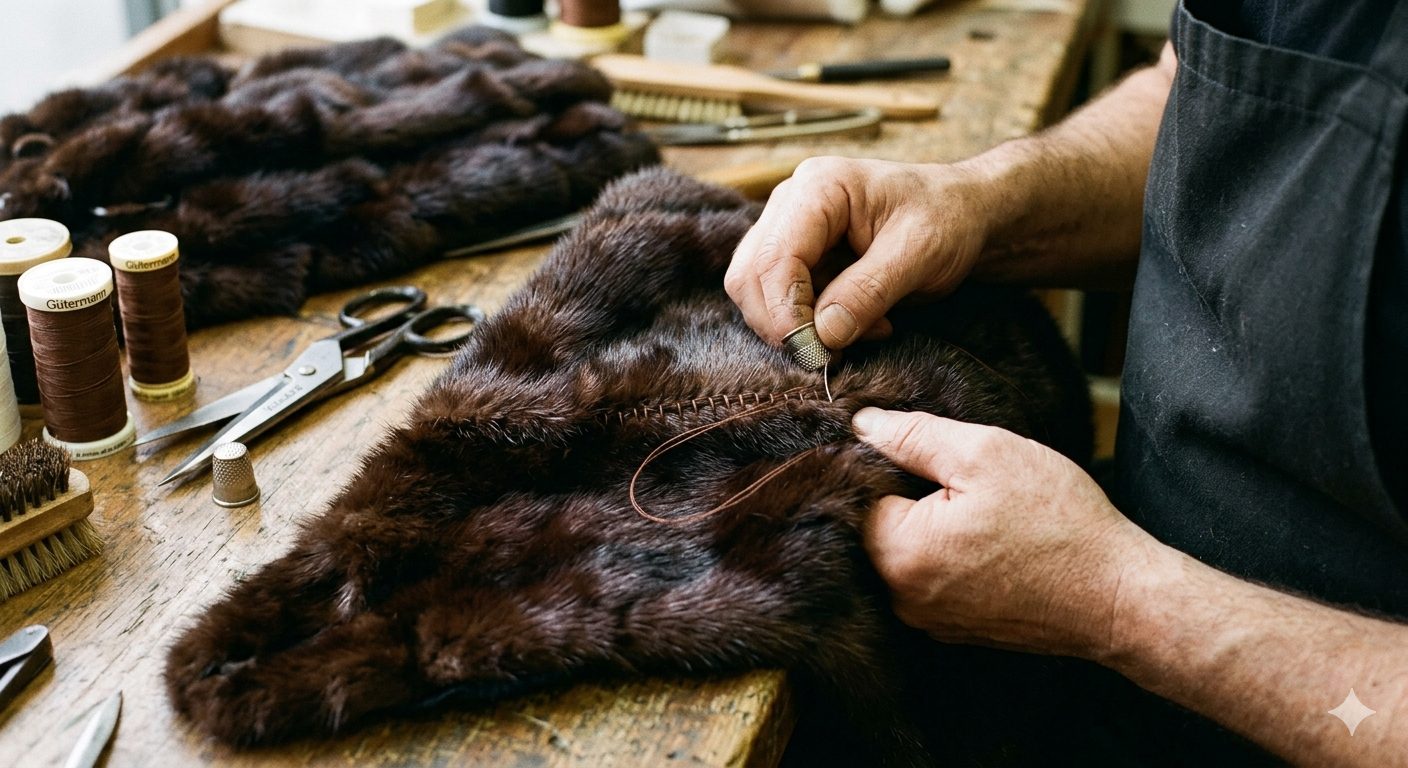
A fine mink coat looks effortless, but behind it are dozens of hours of skilled handwork. Mink is never simply “cut and sewn” like fabric — it’s built, pelt by pelt, by a furrier who has spent years learning the craft. Here’s how a mink coat actually comes together, from raw skin to finished garment, at a workroom like Marc Kaufman Furs, where the family has made mink coats in New York City since 1870.
1. Sourcing and grading the pelts
It starts with the pelts. Mink is graded on clarity of color, density of underfur, silkiness of the guard hair, and size. A single full-length coat can take 30 to 60 matched pelts, so the furrier selects skins that are as close as possible in shade and texture — because any mismatch will show in the finished coat.
2. Matching
Matching is where experience shows. The furrier lays the pelts out and arranges them so the color and hair flow unbroken across the whole garment — shoulders to hem, sleeve to sleeve. On a natural-shade coat this is painstaking; on a coat with subtle shading like sapphire or a cross pattern, it’s an art.
3. Cutting and “letting out”
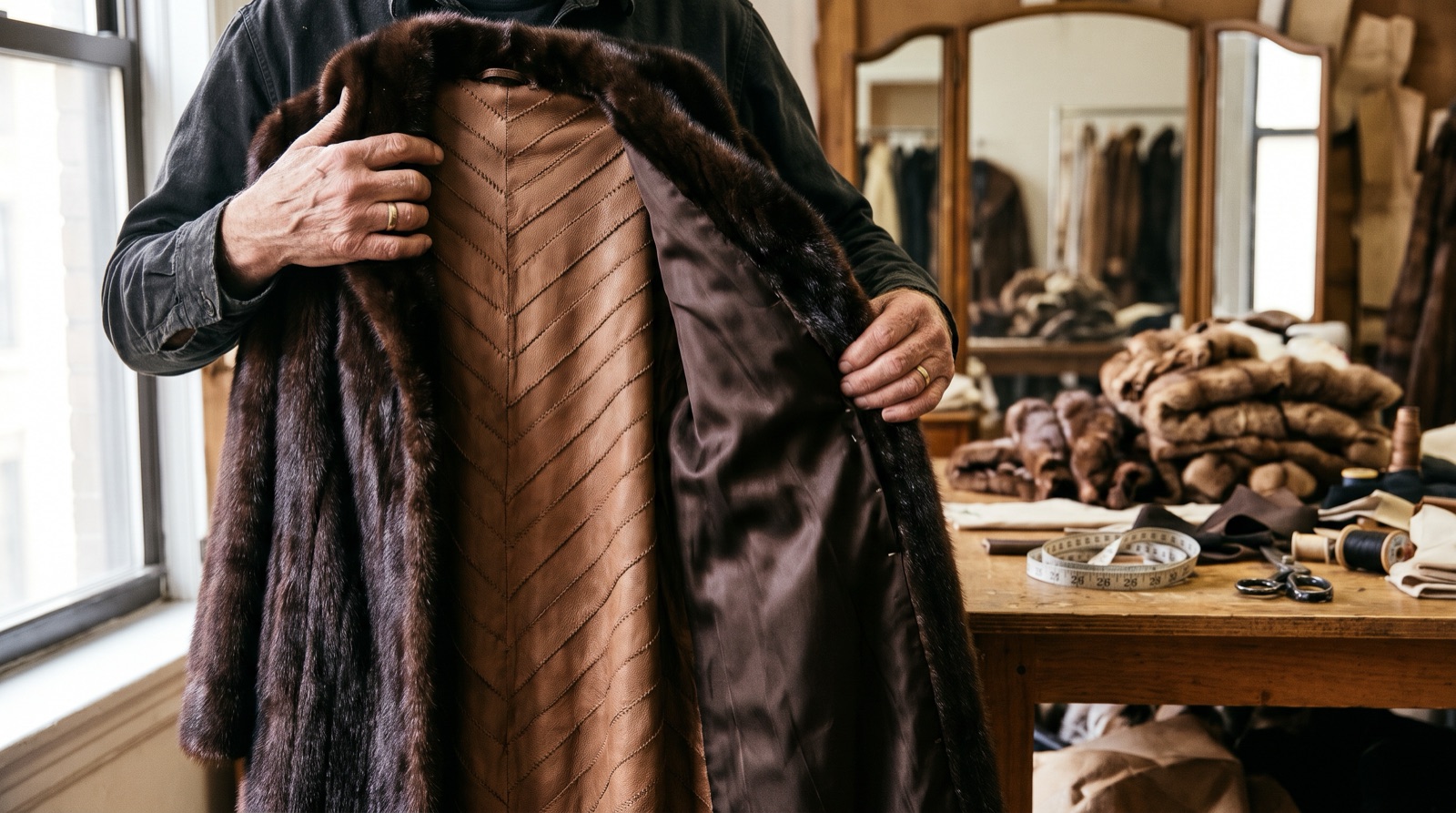
This is the step that separates fine furriery from mass production. In a technique called letting out, each pelt is sliced into dozens of thin diagonal strips and re-sewn to make the skin longer and narrower — so a short mink pelt becomes a slender strip that runs the full length of the coat. It uses more skill and more labor, but it’s what gives a luxury mink coat its fluid, vertical drape.
4. Sewing and the canvas
The let-out pelts are sewn together on a fur machine, then dampened and stapled to a board in the exact shape of the pattern to set — a process called nailing. The fur is backed with a supportive canvas and interfacing that give the coat its structure without weight.
5. Lining and finishing
Finally the coat is lined in silk or satin, closures and hooks are added, and the whole piece is cleaned and glazed so the fur gleams. Only then is it ready to wear — and, with proper care, to last for decades.
Why handmade still matters
Every one of these steps can be rushed or done properly, and it shows in how a coat drapes, wears, and lasts. That’s the difference between a fur bought from a fashion label and one made by a furrier. Explore our full-length mink coats and mink jackets, or contact us about a custom piece made to your measurements.
Mink and fox are the two most popular furs in the world, and if you’re shopping for your first serious fur coat, they’re almost certainly the two you’re deciding between. They look different, wear differently, and suit different personalities. Here’s how they compare across everything that matters — from a family of furriers who’ve worked with both in New York City since 1870.
The look: sleek vs. dramatic
The fastest way to tell mink and fox apart is texture. Mink has short, dense, glossy hair that lies flat and smooth — sleek, refined, and understated. Fox has long, silky guard hairs that stand away from the body, giving it volume, movement, and drama. Mink whispers; fox makes an entrance. If you want a coat that reads quietly expensive, mink is your fur. If you want one that turns heads across a room, fox is hard to beat.
Warmth
Both furs are exceptionally warm, but they get there differently. Mink’s dense underfur traps heat in a thin, efficient layer, so it’s warm without bulk. Fox’s long hairs trap a deep cushion of air, making it one of the warmest furs for truly cold, windy conditions — at the cost of a bulkier silhouette. For an everyday city winter, mink is plenty. For standing outside at a football game in January, fox wins.
Weight and comfort
Mink is remarkably lightweight for its warmth, which is a big part of why it’s the go-to for coats you’ll wear often. Fox is also light, but its volume makes it feel more substantial on the shoulders. Neither is heavy the way old-fashioned furs could be — modern cutting techniques keep both comfortable for all-day wear.
Durability: the deciding factor for many buyers
This is where mink pulls ahead. Mink is one of the most durable furs you can buy — a well-made mink coat, properly cared for, routinely lasts 20 to 40 years and is often handed down. Fox is softer and its long guard hairs are more delicate, so a fox coat generally has a shorter lifespan and shows wear sooner. If you’re thinking of your coat as a decades-long investment, mink is the safer bet. If you want a statement piece for the seasons ahead, fox delivers more drama per dollar.
Color
Mink comes in beautiful natural shades — ranch brown-black, mahogany, sapphire blue-grey, demi-buff, and white — and takes dye elegantly. Fox is the most colorful fur in the world: natural silver, red, blue (indigo), and arctic white, plus vivid dyed shades that mink can’t quite carry off. If color is the point, fox gives you more to play with.
Price
Prices vary widely by quality, length, and workmanship, but as a rule mink commands a higher price for its durability and timelessness, while fox often offers more visual impact for less. Both sit below the rarest furs — sable and chinchilla — at the top of the market.
Care
Both furs need the same basic care: professional cleaning and glazing once a year, and cold storage through the warm months to protect the pelts. At Marc Kaufman Furs we provide all of it in house, which is a good reason to buy your fur from a furrier who can care for it for its whole life.
So, which should you choose?
Choose mink if you want a lightweight, durable, endlessly versatile coat that will last decades and never look dated — the definitive everyday luxury. Explore our full-length mink coats and mink jackets.
Choose fox if you want volume, color, and unmistakable drama — a coat that’s the whole outfit. Explore our fox coats and jackets.
Still not sure? That’s what we’re here for. Marc Kaufman Furs has helped New Yorkers choose the right fur since 1870. Contact us or visit our showroom at 212 West 30th Street, and we’ll walk you through both in person.
A mink coat is the one most people mean when they say fur: light for its warmth, sleek rather than bulky, and made to be worn for twenty or thirty winters. This is what we tell a first-time buyer in our New York workroom: how to read the fur, which length to choose, what the colours are called, how it should fit, and what you are paying for.
Start with your hands. Press the fur flat with your palm and let go: good mink springs straight back, and the guard hairs lie evenly with a deep, almost wet-looking shine. Then turn it over. The leather should be soft, pale and even, with fine, regular seams. Dull, flat or stiff anywhere means poor skins or poor dressing, whatever the label says; our buying guide for every fur covers the same checks.
Female and male skins are both used. Female mink is smaller, lighter and silkier, with a finer leather, so a piece made from it sits lighter on the shoulders and costs more per skin. Male mink is larger and fuller, with a thicker leather: a plusher, heavier piece at a lower price. Ask which a piece is; our real mink coats say so when it matters.
Then how the skins were worked. Let out means each skin was cut into narrow diagonal strips and re-sewn to run the whole length of the garment, which is where the unbroken vertical shimmer comes from, and it takes days of skilled work. Horizontal mink uses whole skins in bands across the body: lighter, more casual, less costly, and very much in fashion. Neither is better; they are different garments. We showed the process step by step in how let-out mink is made.
Length: Full-Length, Stroller or Jacket
Full-length means mid-calf to the ankle: the warmest, the most formal, and the one that turns heads. It is the right choice if you walk in the cold, dress for evenings, or want the piece your daughter will inherit. Everything we make at this length is in the full-length mink coats collection.
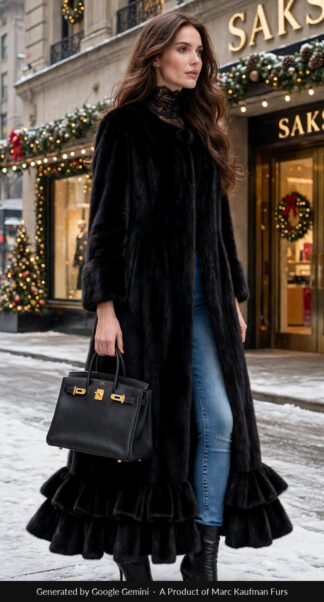
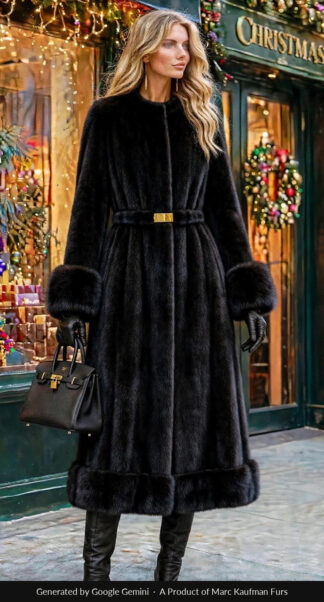
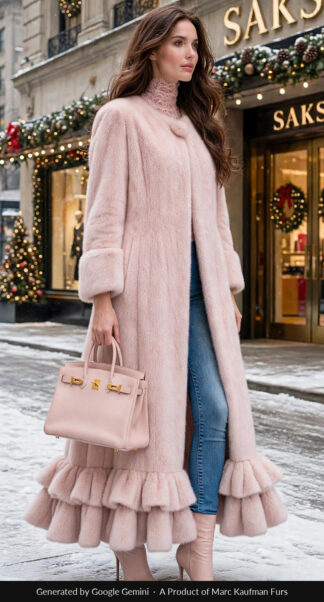
The three newest full-length pieces: a black ruffled hem, a black cardigan collar and the same ruffled hem in blush pink. See the whole collection.
A stroller is our word for a length between the hip and mid-thigh. It gets in and out of taxis without a fight and covers a dress or a long sweater, which is why it is the length most New Yorkers live in: see the mink strollers. A mink jacket stops at the waist or the hip and goes over jeans every day; the cropped, ruffled and flounce-sleeve shapes that arrived this autumn are what younger buyers ask for first.
Colour
Natural mink runs from near-black through the browns to grey and white, and the trade names are worth knowing. Ranch is the dark brown-black most people picture; the deepest, most even ranch skins carry the Blackglama name, explained in what is Blackglama mink. Mahogany is a rich red-brown, whiskey a warm golden brown, sapphire a soft blue-grey. These are undyed, so the colour is the skin’s own and will not fade.
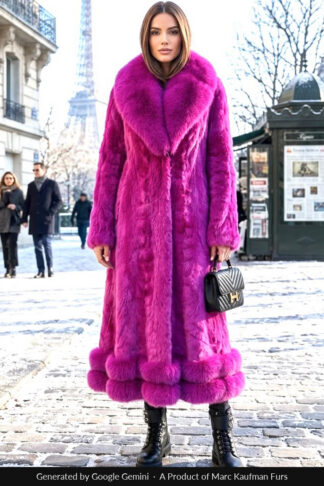
Colour and collars: fuchsia with a fox collar, gray horizontal mink with a sable collar, and burgundy. All from the full-length collection.
Dyed mink is where the fun is: blush, fuchsia, burgundy, aqua, and the pinks on our pink mink page. A good dye house leaves the fur as soft as the natural skin, so judge a coloured piece by the same hand test. Collars change a piece as much as colour does: a fox shawl collar adds volume, a sable collar adds quiet luxury, and a hood on one of our hooded furs replaces a hat on the coldest days.
Mink Against Sable and Fox
A sable coat is lighter, silkier and warmer for its weight than mink, with silvery guard hairs no dye can copy, and it is the most expensive fur we sell; most first-time sable buyers start with a jacket or a collar. The two are set side by side in sable vs mink.
A fox fur coat is the opposite choice: long guard hair, real volume, and a presence mink does not try for. Fox suits a big collar, a hood trim or a statement piece, and it takes colour beautifully. Mink is sleeker, closer to the body and easier to wear every day, which is why we call it the safer first buy in mink vs fox.
Men’s and Plus Size
Men buy mink too, and more every year: a hooded bomber with cargo pockets, a biker jacket with zips, a double-breasted overcoat with contrast lapels. The men’s mink pieces are cut with a man’s shoulder and a longer sleeve, and the full range of men’s fur coats and jackets, in mink, fox, chinchilla and sable, has its own page and its own buying guide.
Plus size is made, not scaled. We do not stretch a size-8 pattern; we cut to your measurements, with the shoulder, the sleeve and the hem in proportion, so it hangs as it should. The plus size fur coats collection is here, and the plus size guide covers which shapes flatter.
How It Should Fit
Shoulders first: the seam sits on the point of your shoulder, not beyond it. Sleeves reach the wrist bone with your arms down, with room for a sweater and no pull across the back. A full-length hem clears the ground by a few inches in the shoes you will wear with it. Everything else can be altered in our workroom, and a fitting is how every piece leaves the shop.
What the Price Is Made Of
Four things set the price: the grade of the skins, how many a full-length piece needs, whether they were let out, and the trim. Dozens of skins go into one garment, hand-matched for colour and texture so the eye reads them as one, and the matching is part of what you pay for. Let-out work costs more than horizontal; a fox or sable collar adds to it; a silk lining and a monogram finish it. The fur clearance page is where last season’s pieces and one-offs go, at the same quality.
See It on Yourself First
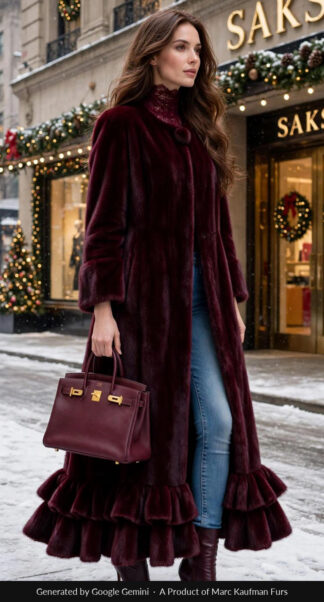
Length and colour are the two things people get wrong when they buy from a photograph. Our virtual fur try-on puts any piece on the site onto a photograph of you, so you can see a full-length ranch against a whiskey stroller on your own body before you ask for a quote. Upload a photo taken straight on in good light and the piece appears on you in about a minute. It is free, needs no account, and everyone gets three try-ons a day.
The styler can change the background to a snowy street, Central Park or a winter wedding, so you see it where you would wear it. Every picture keeps a small credit line at the bottom. The final fit and colour are settled at a fitting in our New York workroom.
Keeping It for Thirty Years
Looked after, mink outlives its first owner. Hang it on a broad padded hanger with air around it, never in plastic; keep it out of heat and sunlight; never spray perfume on it. Each spring it goes into cold storage, and a furrier cleans it every year or two. How to store fur explains why a closet in July does the damage a winter never will.
Questions
How can I tell if mink is good quality?
Press the fur flat and let go: good mink springs straight back, with an even, deep shine. Inside, the leather should be soft and the seams fine and regular. Dull, flat or stiff anywhere is a reason to walk away. See our full-length mink.
What does let-out mean?
Each skin is cut into narrow diagonal strips and re-sewn to run the full length of the garment, which gives the unbroken vertical shimmer. Horizontal mink uses whole skins in bands and is lighter and more casual. How let-out mink is made.
How long does mink last?
Twenty to thirty years of regular wear, and longer with cold storage each summer, cleaning every year or two, and a restyle when the shape dates. Storage, cleaning and repairs.